

News and events
All blog posts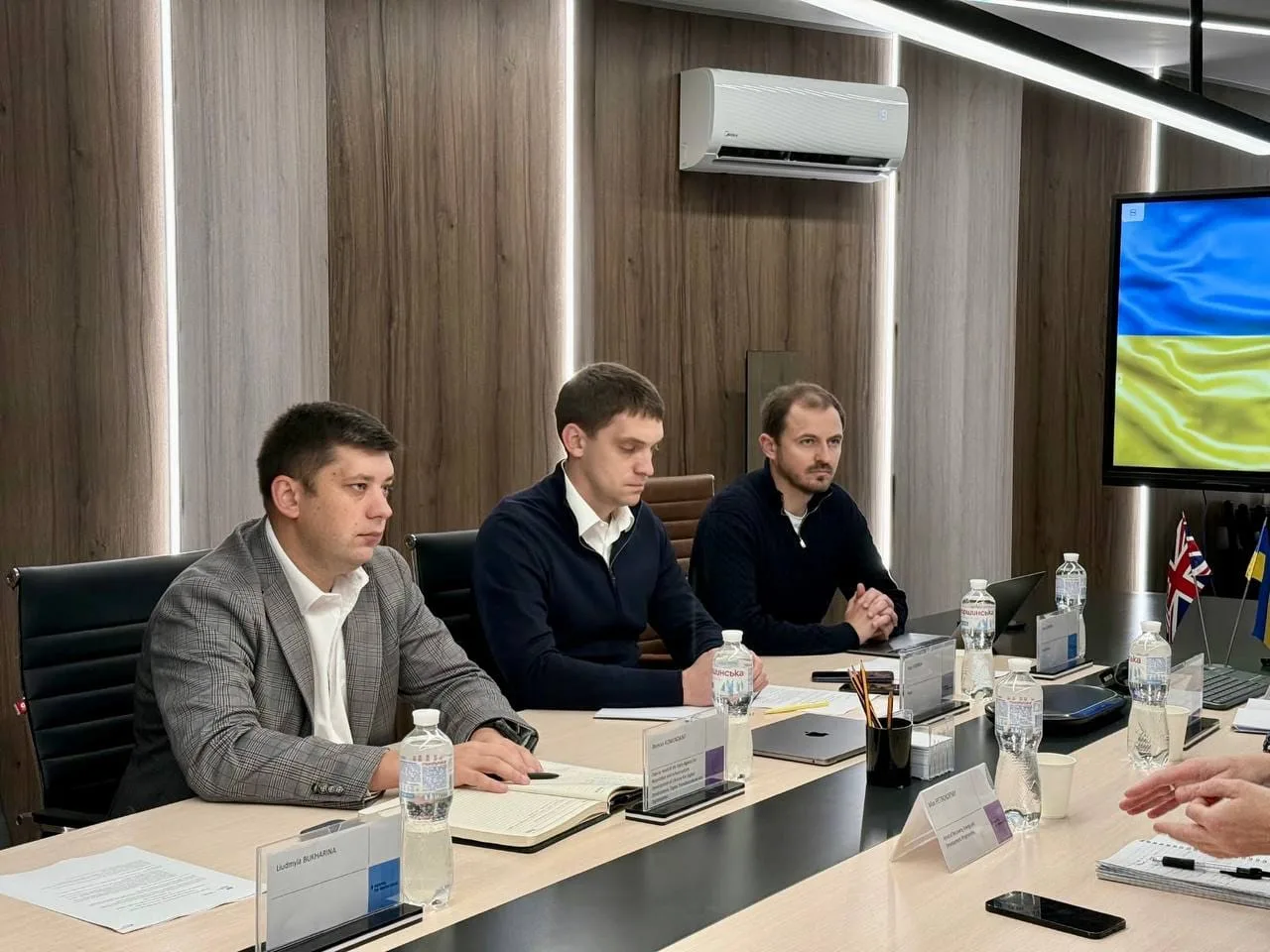
Ukraine’s Agency for Restoration and the British Embassy Kyiv Discuss Further Cooperation on Critical Infrastructure Recovery and Scaling Up BIM Implementation
Ivan Fedorov, Head of the State Agency for Restoration and Infrastructure Development of Ukraine, held a working meeting with representatives of the British Embassy Kyiv. The parties discussed the results of the UK-funded Foundations for Infrastructure Recovery (FIRE) programme, priorities for critical infrastructure recovery, and opportunities to continue and expand cooperation, including the implementation of […]
Our Partners
all partners



FREQUENTLY ASKED QUESTIONS
Is the Agency for Restoration responsible for all reconstruction in the country?
To support internally displaced persons (IDPs), we are launching a project to build social housing in communities. In the first phase, 15 communities are expected to construct 50,000 apartments. The Agency serves as a project coordinator.
There is also the eRestoration program, which helps restore damaged housing. More information on Ukrainian and international approaches to social housing is available.
My home is destroyed - when will it be rebuilt?
To support internally displaced persons (IDPs), we are launching a project to build social housing in communities. In the first phase, 15 communities are expected to construct 50,000 apartments. The Agency serves as a project coordinator.
There is also the eRestoration program, which helps restore damaged housing. More information on Ukrainian and international approaches to social housing is available.
Who is financing the reconstruction?
The reconstruction is funded by the state budget of Ukraine, contributions from international financial organizations (EBRD, World Bank), grant programs and international technical assistance projects from partner governments, and community fundraisers.
Learn more about our partners and joint projects on the Partners and Projects pages.
Why does the reconstruction take so long?
Reconstruction is a complex process that requires planning, financing, procurement, and oversight. To achieve sustainable results, we must carefully assess and mitigate technical, environmental, financial, and corruption risks.
During wartime, however, we are accelerating certain processes. For instance, a water supply system in the Dnipropetrovsk region was built within one year, whereas planning alone would have taken 1–3 years in peacetime conditions in countries like the UK.
Reconstruction is by nature a long-term effort, but survival-related work is progressing at record speed.
How is the energy sector protected?
The energy sector is one of the main targets of Russian attacks, making its protection a national priority. We are implementing three levels of protection at 22 Ukrenergo substations:
Level 1: Rapid-response measures, including sandbag fortification and anti-drone netting. These are quick solutions that reduce the risk of damage.
Level 2: Systems that defend against missile fragments and kamikaze drones. They are already operational and preventing blackouts in several regions.
Level 3: Heavy-duty protective structures capable of withstanding direct strikes.
Why repair roads during the war?
Road repairs are not just about convenience, but about vital necessity. Roads connect the country: linking the front with the rear, hospitals with frontlines, businesses with borders. They are used to transport the wounded, humanitarian aid, weapons, and exported goods.
For victory: We prioritise roads that support military logistics, such as the Road of Life in the Kharkiv region, because they save lives.
For the economy: With support from international partners, we are building new routes to the borders to speed up exports and expanding border crossing capacity.
For safety: We are rebuilding bridges, clearing snow, repairing signs and markings to ensure safety for all road users.
Why is it important to invest in social housing?
Ukraine’s housing stock has significantly declined since the privatisation reforms of the 1990s. Today, less than 10% of housing is publicly owned, creating challenges for IDPs and vulnerable groups.
In contrast, many EU countries maintain a 10–30% share of social housing in cities. This is used not only for the most vulnerable, but also for mixed-income housing, which strengthens the rental market and improves affordability.
Ukraine already has examples of effective support, such as the Ukraine Facility program, which allocates €450 million for housing for IDPs, veterans, and their families. The eOselya mortgage programme also exists, though its availability for IDPs is currently limited.
Social housing allows IDPs to stay in Ukraine, supporting the economy and communities. It is an affordable alternative to private rentals, particularly for those unable to make a down payment.
An estimated 1 million new apartments will be needed to house all IDPs and individuals who lost their homes due to the war. In the first phase, 15 communities are expected to build 50,000 apartments.