
The Agency for Restoration continues its systematic efforts to implement Building Information Modeling (BIM) in Ukraine’s infrastructure recovery and development projects.
A practical seminar titled “BIM Pilot Project – Infrastructure Project Management Based on an Information Model” was held in Lutsk, focusing on the implementation of modern digital approaches to project delivery and coordination.
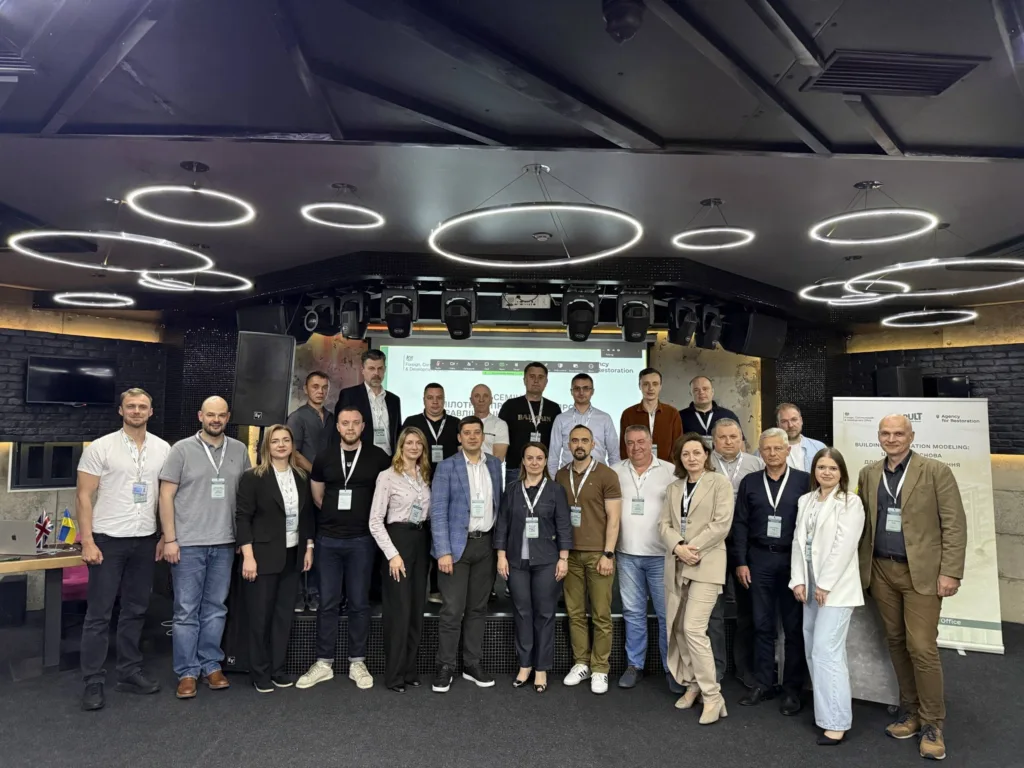
The event brought together representatives of the Agency for Restoration, industry experts, and regional Services for Restoration, and project teams involved in BIM pilot projects. British experts and partners from Connected Places Catapult (UK), Gleeds (UK), and Mott MacDonald (UK) also participated, sharing the United Kingdom’s experience, best practices in the digital transformation of the construction sector, and real-life examples of BIM implementation in the public sector.

“The UK is helping to practically implement projects within the framework of cooperation with the Agency for Restoration. In particular, we are strengthening institutional capacity and team expertise through training programmes, educational workshops, and practical knowledge exchange. We are open to dialogue and understand the importance of establishing a new systematic approach to information management as a foundation for the effective delivery of recovery projects. Digital tools and a unified information environment are essential for ensuring transparency, coordination, and high-quality management of infrastructure assets throughout their entire lifecycle,” said Adam Matthews, representative of Connected Places Catapult.
During the seminar, participants discussed practical aspects of BIM implementation and the digital transformation of the construction sector, including the organization of work within a Common Data Environment (CDE) as a key component of a unified project digital ecosystem.
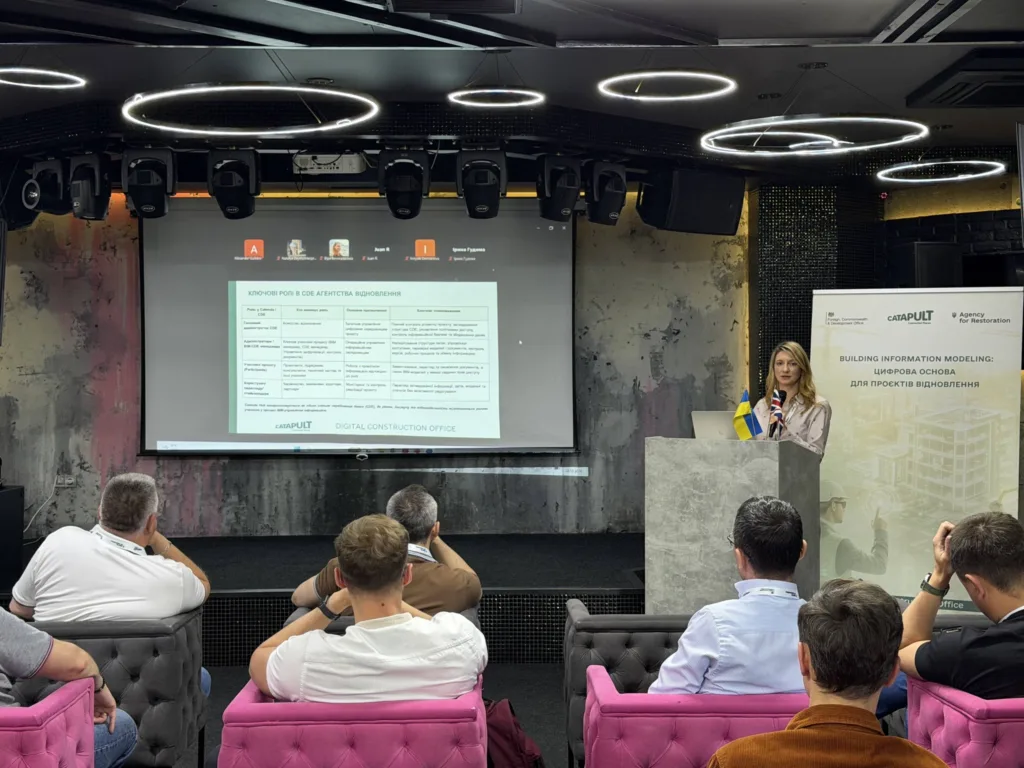
Special attention was given to the formation of BIM teams, defining roles and responsibilities in accordance with BIM processes, and ensuring effective collaboration among all project stakeholders.
Participants also explored the creation of a digital workspace for project teams, the development of responsibility matrices, and risk management within a digital environment.
Another key topic of discussion was the development of an integrated BIM ecosystem that enables transparent data exchange, process coordination, improved decision-making, and effective collaboration among all participants in the construction process.

“Today, it is important for us not only to talk about BIM but also to launch real pilot projects and gain practical experience with digital tools. Together with the Digital Construction Office and with the support of our British partners, we are developing project management approaches based on a Common Data Environment, clear team coordination, and transparent implementation processes. These practical case studies allow us to adapt BIM to Ukraine’s infrastructure recovery system and scale these solutions further,” said Roman Komendant, Deputy Head of the Agency for Restoration for Digital Development, Digital Transformation, and Digitalization.
The BIM implementation project at the Agency for Restoration is being delivered with the support of the UK Foreign, Commonwealth & Development Office (FCDO) for the State Agency for Reconstruction and Development Infrastructure of Ukraine, in partnership with Connected Places Catapult (CPC).