
After the full-scale invasion by Russia, hundreds of settlements in Ukraine were left without access to centralized water supply due to destroyed infrastructure.
On June 6, 2023, Russian occupiers blew up the dam of the Kakhovka Hydroelectric Power Plant in Kherson Oblast — the fifth-largest hydroelectric plant in Ukraine. The explosion caused massive flooding. Homes, fields, and entire settlements were submerged, with the left bank of Kherson region suffering the most.
Due to the drop in water levels in the Kakhovka Reservoir, large parts of Dnipropetrovsk, Zaporizhzhia, Mykolaiv, and Kherson regions were left without water supply.
In response to this challenge, the Agency for Restoration expanded its activities and began constructing new water pipelines to provide people with drinking water and restore basic living conditions in affected settlements.
We are working in communities where restoring water supply is critically important for the return of residents, as well as the operation of hospitals, schools, and businesses.
The construction of new water pipelines is not only about recovery — it is about building a reliable, future-proof, and resilient infrastructure for years to come.
Leading Ukrainian and international engineers are involved in this work. Funding is provided both from the state budget and with the support of international partners.
Ongoing
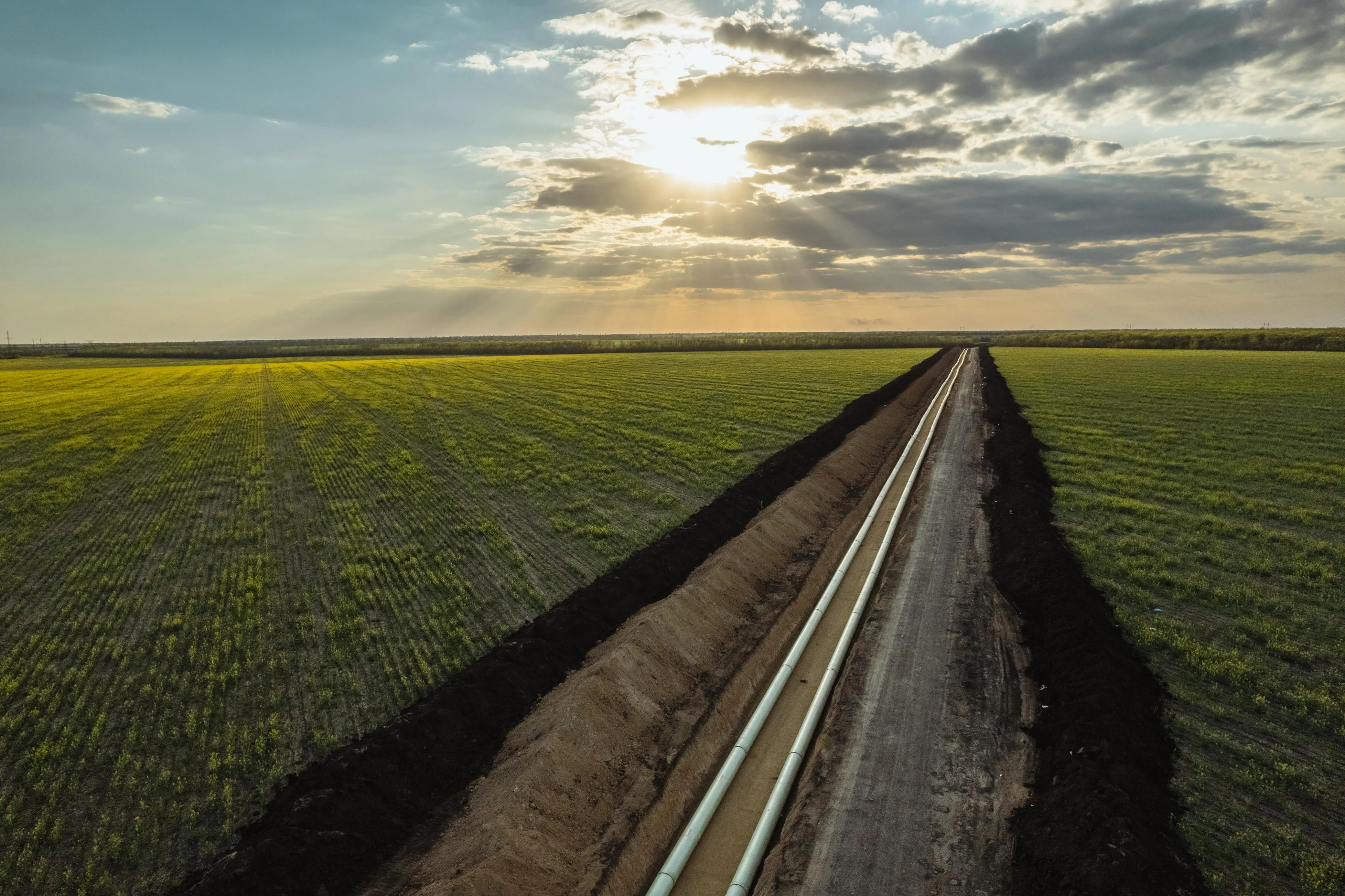
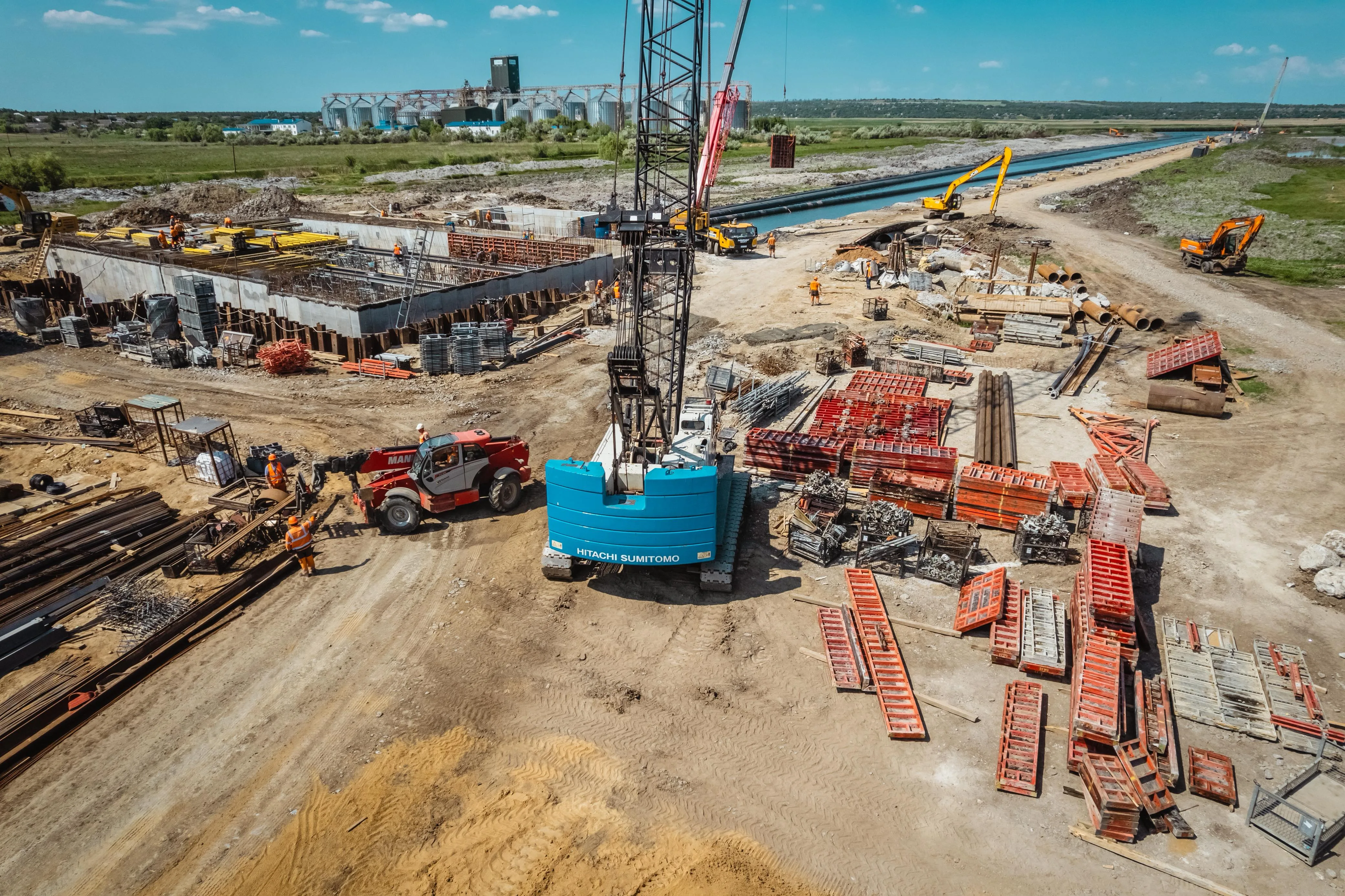
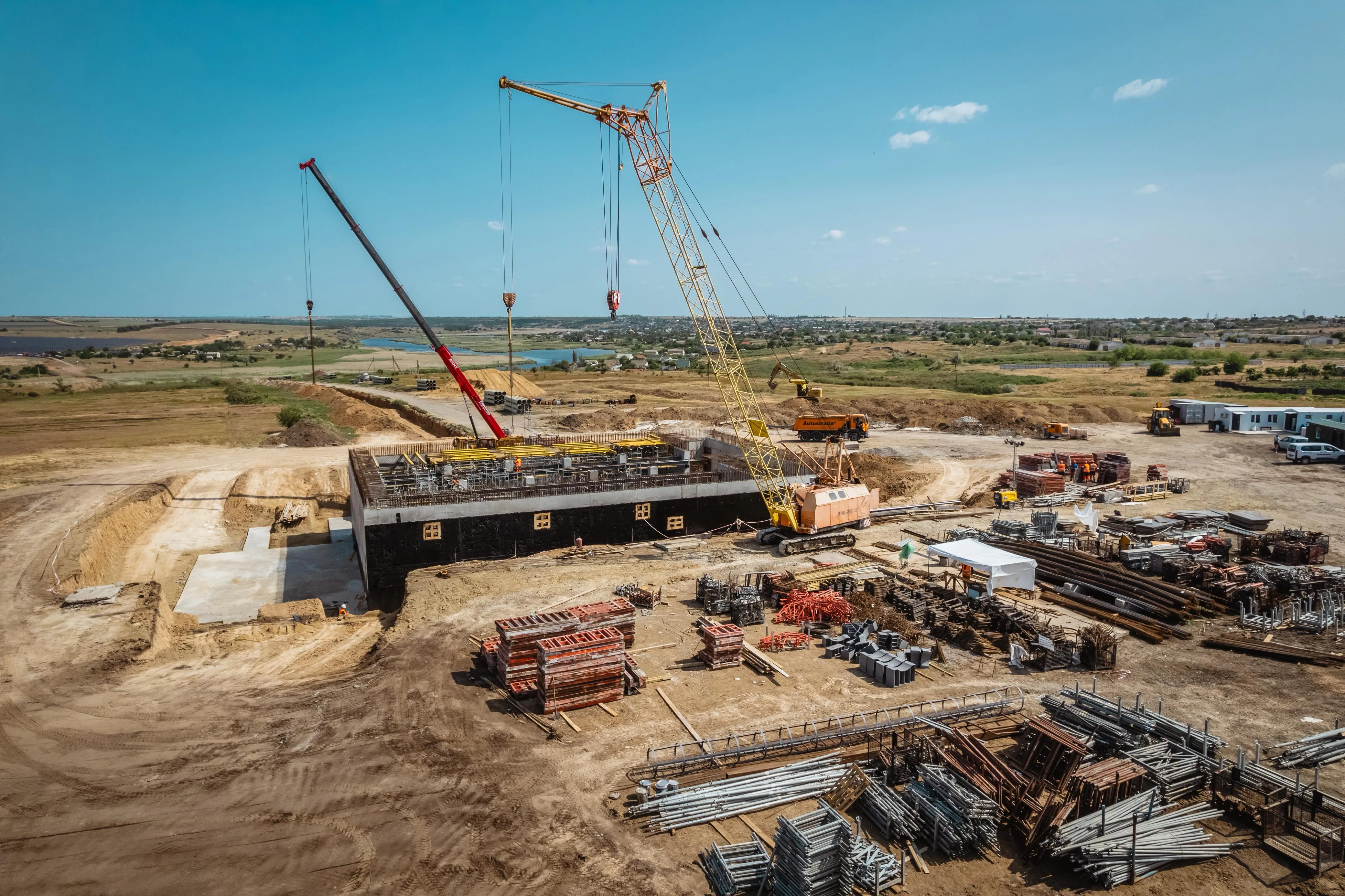
Water Pipeline for Mykolaiv
The total length of the water pipeline is approximately 120 km, laid in two parallel lines. Its capacity is 120,000 cubic meters per day for Mykolaiv and 50,000 cubic meters for the irrigation system of Nova Odesa and Mykolaiv Raion. It will provide drinking water to 500,000 residents of Mykolaiv.
The pipeline includes several facilities, such as: a water intake from the Southern Bug River, intake pipelines, water pumping stations, and main pressure pipelines.
The pipeline consists of three segments with lengths of 18,405 m, 22,900 m, and 26,585 m.
The designed capacity is 120,000 m³/day.
The water intake is planned with a capacity of 170,000 m³/day to account for future needs and irrigation system demands.
Pipeline for Discharge of Mine Water (from Svystunova Gully to the Inhulets River)
The implementation of the project ensures guaranteed, uninterrupted water supply for the livelihood and industry of the city of Kryvyi Rih and its associated territorial communities, with minimal environmental impact.
The project is being implemented to prevent contaminated mine water from entering the water supply system and to ensure continuous delivery of drinking water to over 700,000 residents of the Kryvyi Rih district.
A drainage system has been constructed from the mine water accumulation pond — the discharge point has been moved downstream of the water intake; a 6.6 km pipeline has been laid; the project includes a metal bridge over the Inhulets River and the construction of a chamber with shut-off valves; land restoration and topsoil recovery will be carried out upon completion of the works.
Project completion is scheduled for 2025.
Prospective
Bolhrad Group Water Pipeline
The Bolhrad Group Water Pipeline in Odesa Oblast includes 95.2 km of main pipelines and is designed to supply water from the Danube River to 7 settlements (approximately 20,000 residents).
It is planned to connect the system to a single water intake from the Danube River and the treatment facilities of the Kiliia Group Water Pipeline.
What needs to be done:
Complete the construction of the main water pipeline:
▪︎ Lay 7.5 km of pipeline
Construct 6 pumping stations in the following locations: Kalcheva, Bannevka, Karakurt, Vasylivka, Holytsia, Suvorove
Complete works at the pumping station sites, including installation of:
- Clean water storage tanks
- Transformer substations
- Water disinfection systems
Estimated completion — end of 2025.
Suvorove Group Water Pipeline
The Suvorove Group Water Pipeline in Odesa Oblast includes 104.6 km of main pipelines and is designed to supply water from the Danube River to 9 settlements (approximately 25,000 residents): Komyshivka, Muravlivka, Kyslytsia, Kyrnychky, Novopokrivka, Pershotravneve, Kalanchak, Kamyanka, and Stari Troyany.
Planned activities:
▪︎ Lay 7.5 km of pipeline
▪︎ Construct 9 pumping stations
▪︎ Install and connect utility networks and clean water storage tanks
Estimated completion — end of 2025.
Water Pipeline in Vapniarka
The project envisions the construction of a main water pipeline from boreholes, including a pumping station and two clean water reservoirs with a capacity of 500 m³ each.
The goal is to provide a reliable water supply for 10,000 residents.
Water Pipeline in Lubny
The project envisions supplying water to approximately 30,000 residents and 8,500 internally displaced persons (IDPs).
Water Pipeline in Bucha
The project envisions supplying water to 6 settlements (approximately 70,000 residents).
Water Pipeline and Pumping-Filtration Station in the Town of Tomakivka
The project includes the construction of a main supply water pipeline and a pumping-filtration station in the town of Tomakivka, Nikopol district, Dnipropetrovsk region. The goal is to supply Tomakivka with water from the already constructed main water pipeline: Khortytsia (DVS2) – Tomakivka – Marhanets.
Estimated completion — end of 2025.
Water Pipeline and Pumping-Filtration Station in the Village of Myrove
The project includes the construction of a main supply water pipeline and a pumping-filtration station in the Myrove rural territorial community, Nikopol district, Dnipropetrovsk region. The goal is to supply Myrove with water from the already constructed main water pipeline: Khortytsia (DVS2) – Tomakivka – Marhanets.
Estimated completion — end of 2025.
Modular Treatment Facilities
Most communities face issues with their treatment facilities due to physical deterioration and outdated equipment, tanks, and pumps.
The modular approach to implementing treatment facilities enables the construction of systems for various purposes and capacities within extremely short timeframes. The entire process from design to financing takes just a few months.
We are actively working in this direction, as it aligns with modern and innovative solutions.
Completed
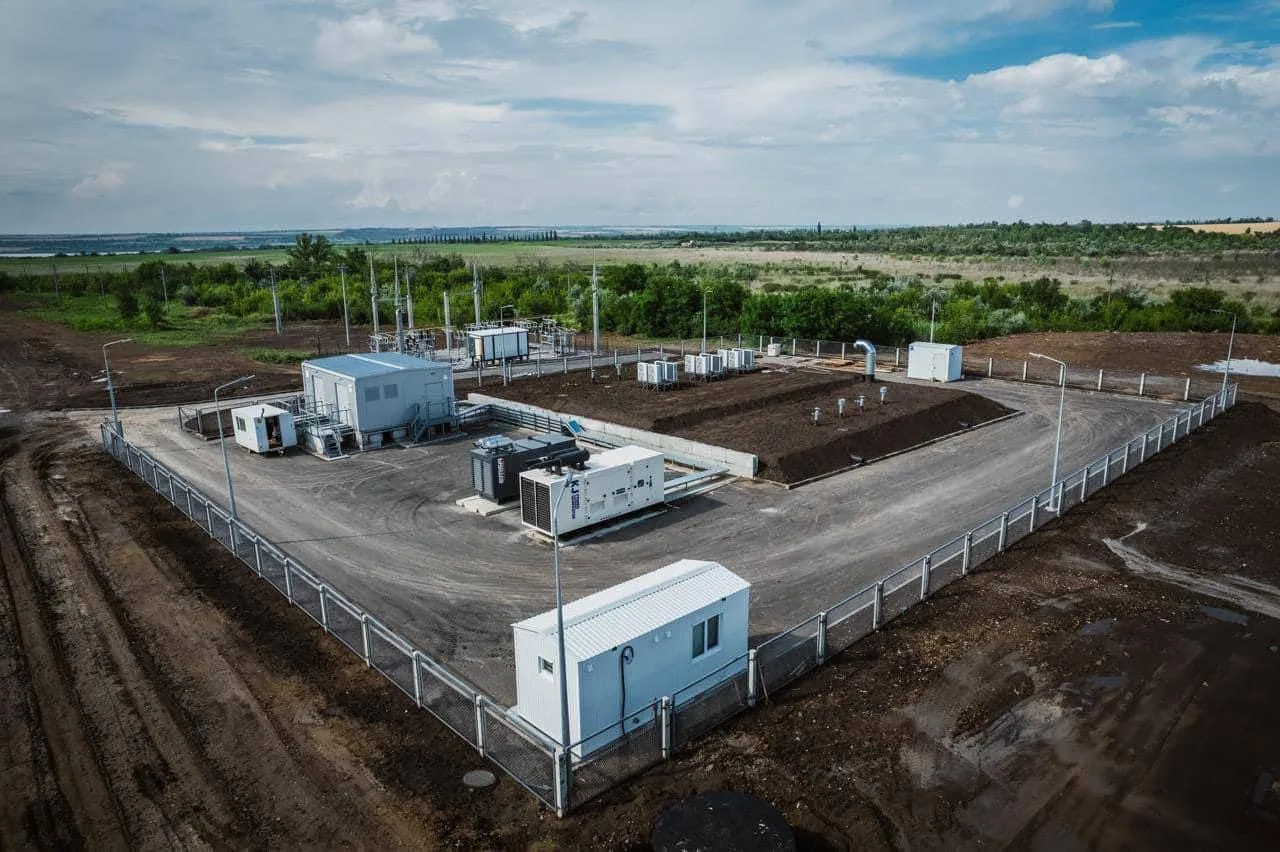
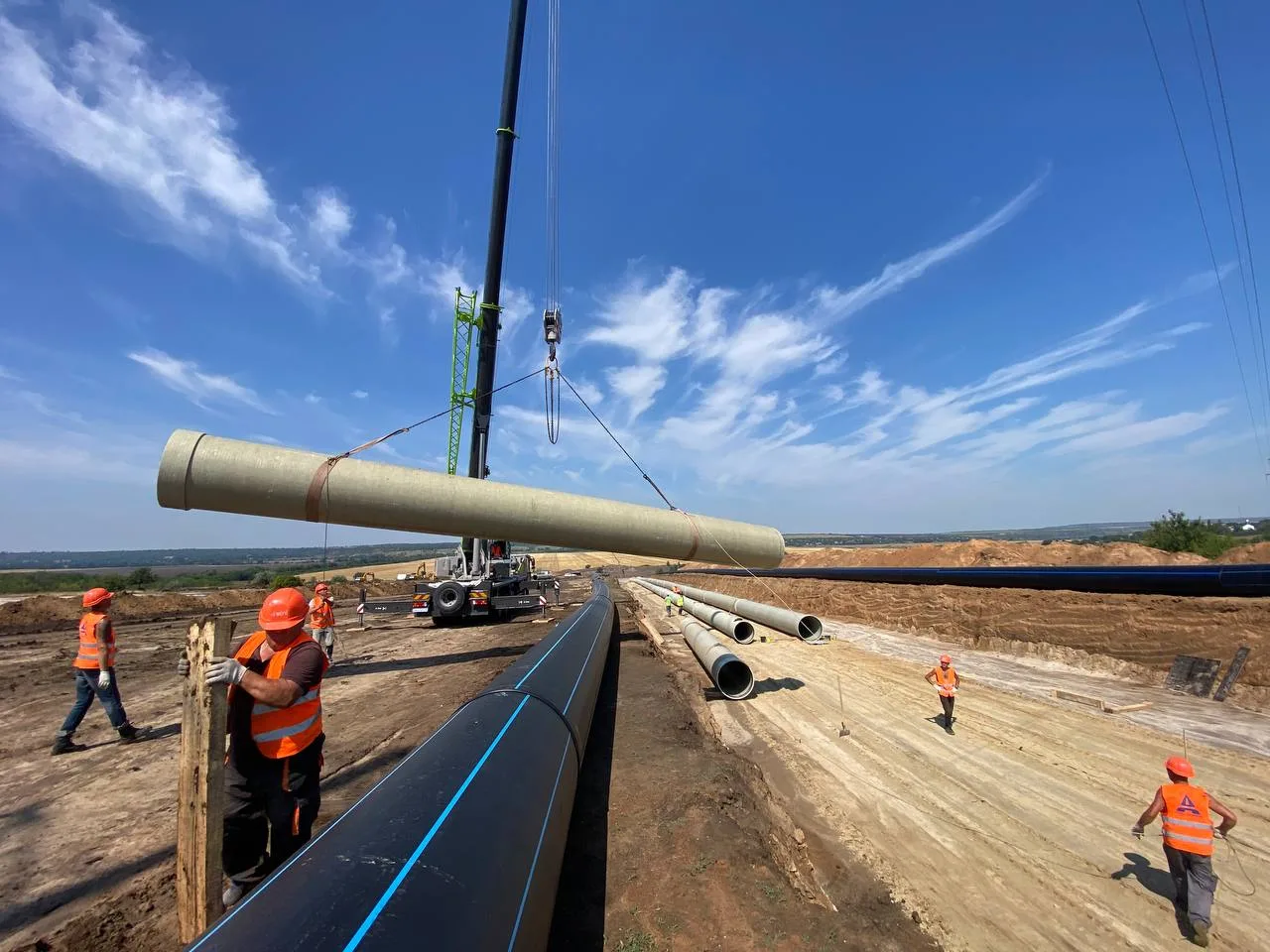
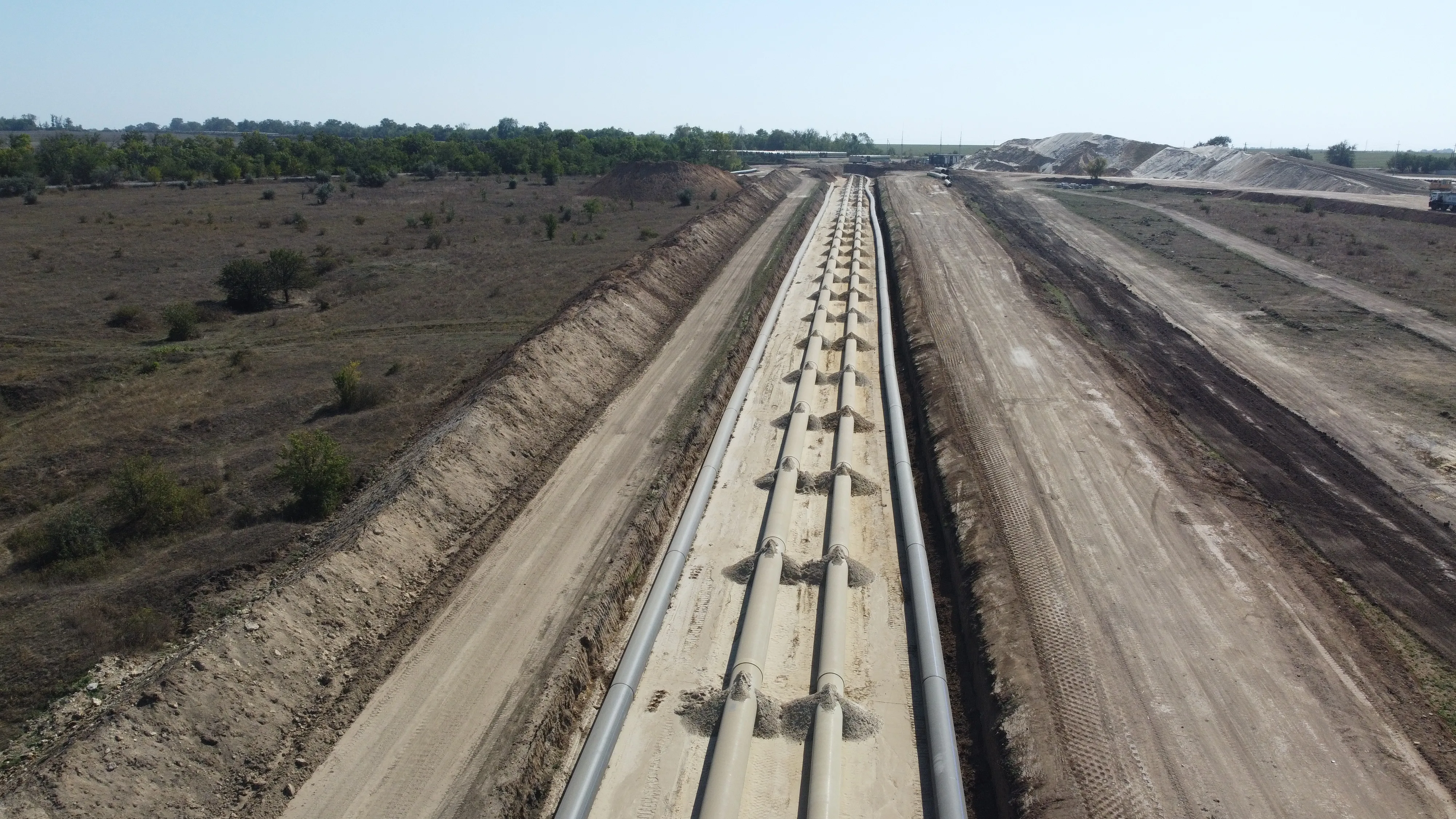
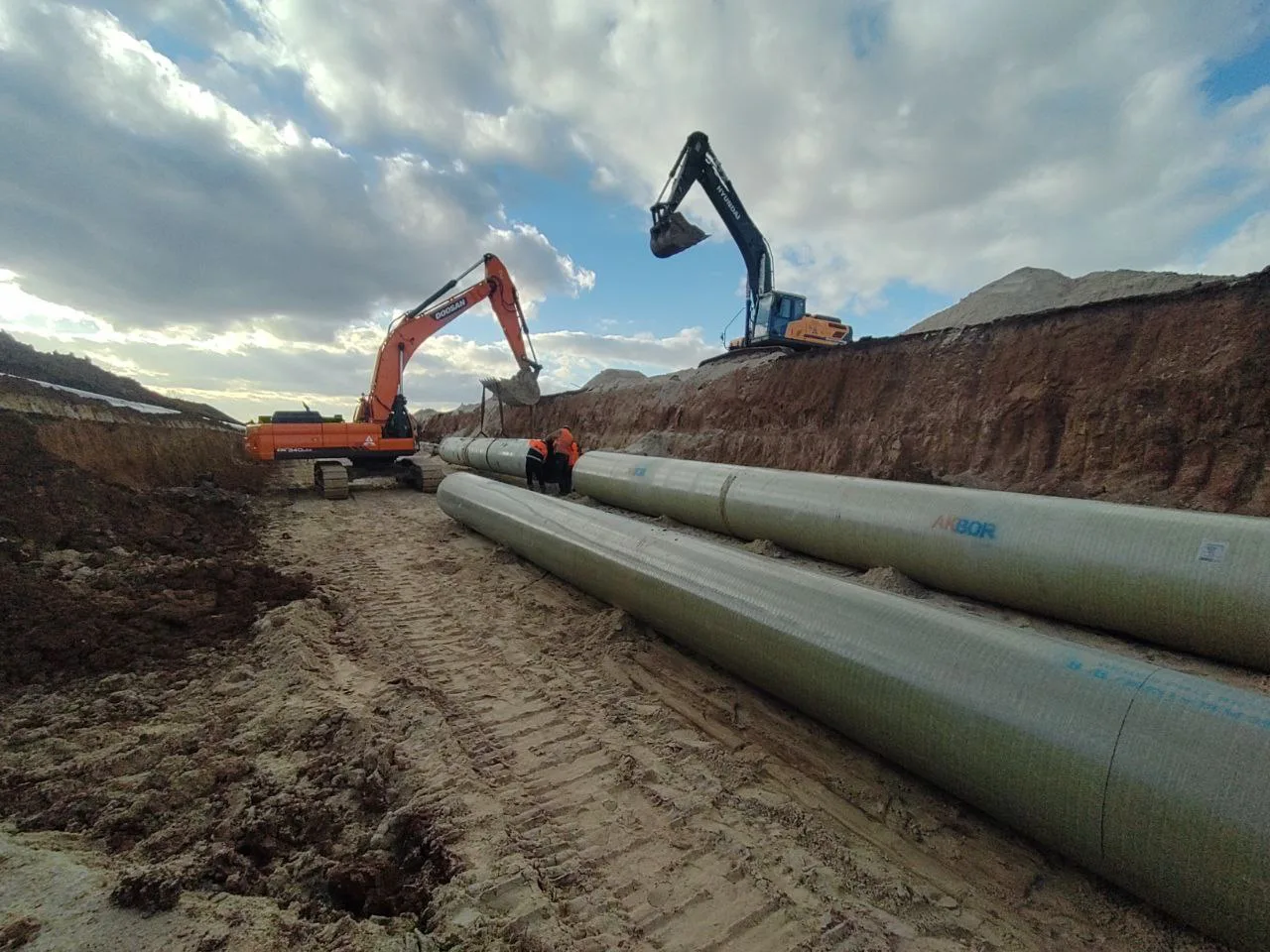
Water Pipelines in Dnipropetrovsk Region
As a result of the destruction of the Kakhovka Hydroelectric Power Plant dam in Kherson region, more than 600 km² of territory were flooded, including 80 settlements in Kherson region. Around 64,000 hectares of forests were inundated, unique natural ecosystems were destroyed, and millions of people were left without access to drinking water. Four regions were affected: Dnipropetrovsk, Zaporizhzhia, Kherson, and Mykolaiv. Water supply was completely disrupted in the cities of Nikopol, Marhanets, Pokrov, Kryvyi Rih, Tomakivka, and Marianske.
According to the joint report by the Government of Ukraine and the United Nations, Post-Disaster Needs Assessment of the Kakhovka Dam Breach, the total damages and losses exceeded USD 14 billion.
Immediate Response: Finding Solutions
Due to the scale of the consequences and the direct threat to people’s lives and health, restoring water supply required immediate action. The Agency for Restoration became involved in the implementation of critically important infrastructure projects from the first days after the disaster.
Design and construction began for three main water pipelines:
- Inhulets River – Pivdenne Reservoir
- Khortytsia (DVS-2) – Tomakivka – Marhanets
- Marhanets – Nikopol – Pokrov
The total length of the new pipelines was 155 km. Design and construction took place simultaneously — nonstop, in three shifts. More than 1,000 people and about 500 units of machinery were working on site daily.
Logistical Challenges and Resource Mobilization
Due to the high demand for pipes of various diameters (from 315 to 1200 mm), which are not produced in sufficient quantities in Ukraine, materials were delivered from Poland, Romania, Turkey, Austria, Italy, and other countries. Over 331 km of pipelines were installed.
A separate challenge was the supply of pumping equipment — 45 high-capacity pumps were required for the water pipelines. Given the standard manufacturing lead time of up to 18 months, the Agency’s experts held constant negotiations with suppliers to ensure the fastest possible delivery.
Work in the Combat Zone
A significant portion of the construction took place under constant threat. In Nikopol, construction teams worked just 6 km from the frontline, under enemy fire. Over 15 units of machinery were damaged by shelling, and several construction workers were injured.
Result: Drinking Water for 1.5 Million Ukrainians
Despite all challenges, in less than a year, one of the largest infrastructure projects in the history of independent Ukraine was successfully completed.
- The total capacity of the main pipelines is 550,000 m³ per day.
- 11 pumping stations and 11 power substations were built. Each pumping station is equipped with a backup generator, ensuring water supply even during power outages.
- The Inhulets River – Pivdenne Reservoir pipeline has a capacity of 400,000 m³/day. Its first line became operational on August 21, 2023, and the fourth line on June 7, 2024.
- The Khortytsia (DVS-2) – Tomakivka – Marhanets and Marhanets – Nikopol – Pokrov pipelines reached full operational capacity on June 18, 2024, supplying 150,000 m³ of water daily.
Завдяки реалізованим проєктам 1,5 мільйона мешканців постраждалих регіонів отримали питну воду.