
Ukraine’s Minister for Restoration, Infrastructure and Transport Mykola Kalashnyk, together with Mykola Boiko, First Deputy Head of the Agency for Restoration, made a working visit to Dnipropetrovsk, Odesa, and Zaporizhzhia regions. They held coordination meetings and inspected sites where restoration works are underway, together with representatives of the Ministry for Communities and Territories Development of Ukraine, heads of regional military administrations, members of parliament, and representatives of the regional restoration services.
The focus was on protecting critical infrastructure. Together with Ivan Fedorov, Head of the Zaporizhzhia Regional Military Administration, they visited energy and water supply facilities where the Agency for Restoration is implementing projects to construct physical protection against enemy attacks.
The works are being carried out according to the approved schedules and are currently at the final stage. Some of these are pilot projects that are already demonstrating their effectiveness and may subsequently be implemented in other regions. A coordination meeting was also held, with the implementation of the region’s resilience plans among the key issues discussed.
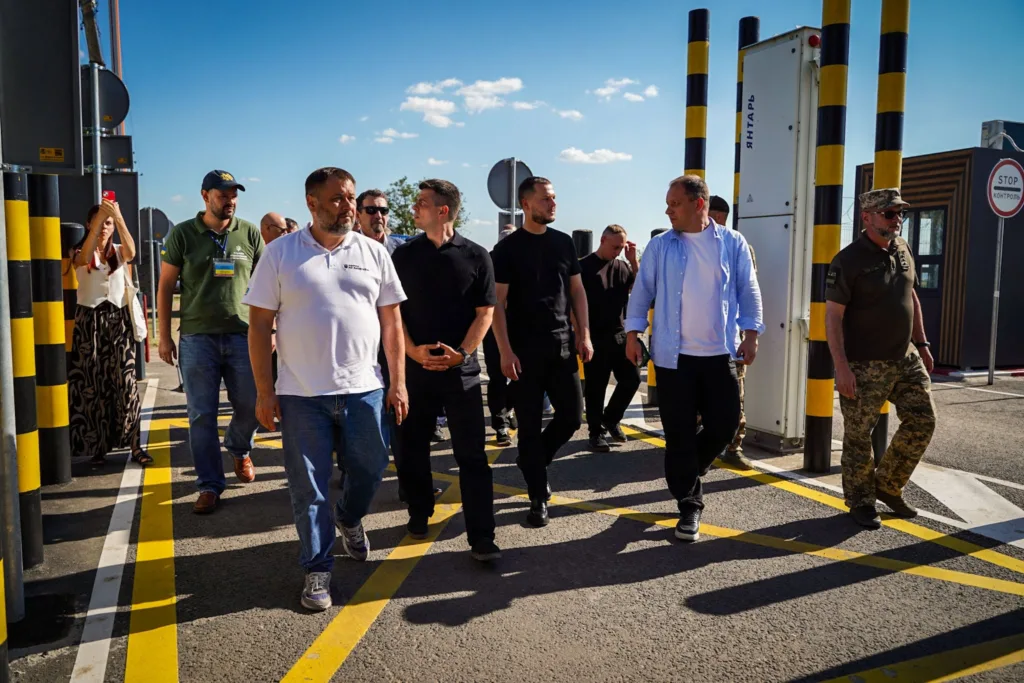
In Odesa region, the delegation inspected critical infrastructure facilities and discussed projects aimed at strengthening their protection. They also visited two international border crossing points where modernization and routine repair works have already been completed.
“Logistics today is the foundation of the state’s economic resilience. Every bottleneck along a route, every delay at the border, or any restriction on capacity represents direct losses for the Ukrainian economy. Our task is to systematically eliminate these constraints so that transport infrastructure operates quickly, continuously, and proactively,” said Mykola Kalashnyk.
At the “Dolynske – Chyshmikioi” border crossing, the infrastructure has been upgraded: seven modern modular facilities were installed, the site was comprehensively improved, and backup power supply was provided.
At the “Starokozache – Tudora” border crossing, existing buildings were renovated, nine new modular facilities were installed, and landscaping works were completed. To increase capacity, an additional stage of modernization is planned for next year.
The delegation also visited one of the landmark projects for the development of border and transport infrastructure in Odesa region — a parking and rest area for road users near the international “Reni – Giurgiulești” border crossing.
Construction works have been fully completed. The facility provides parking spaces for 46 trucks and 13 passenger cars, including two spaces designed in accordance with accessibility principles.
The project aims to develop transport infrastructure, streamline traffic flows, increase the capacity of the border crossing, and improve conditions for drivers and passengers involved in international transportation.
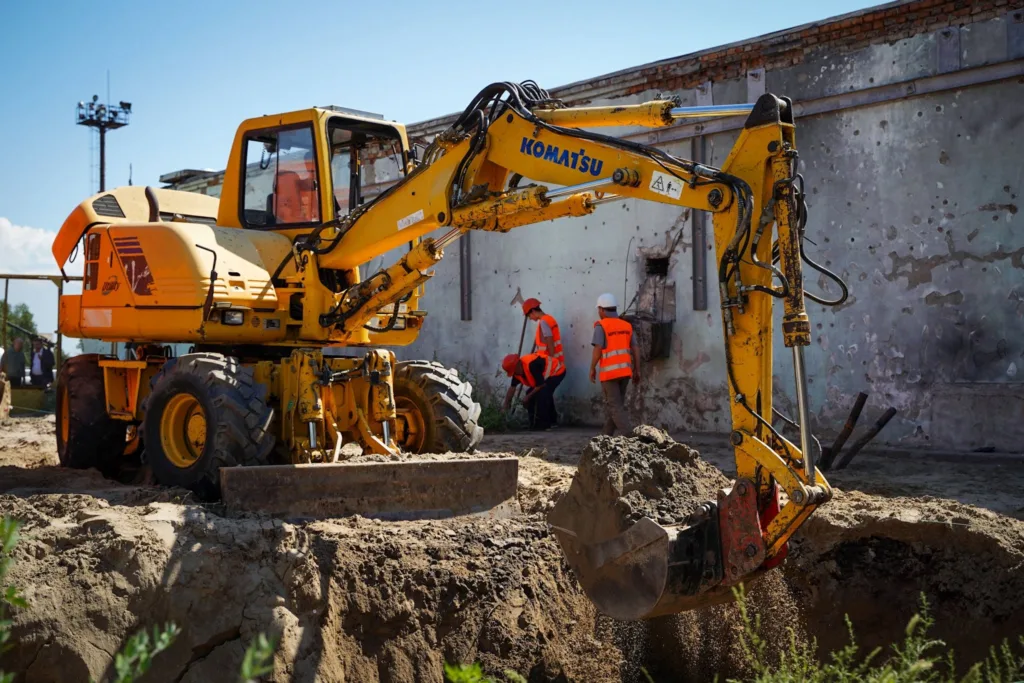
In Dnipropetrovsk region, the delegation visited critical infrastructure facilities in Dnipro and Kryvyi Rih, where construction of physical protection is underway.
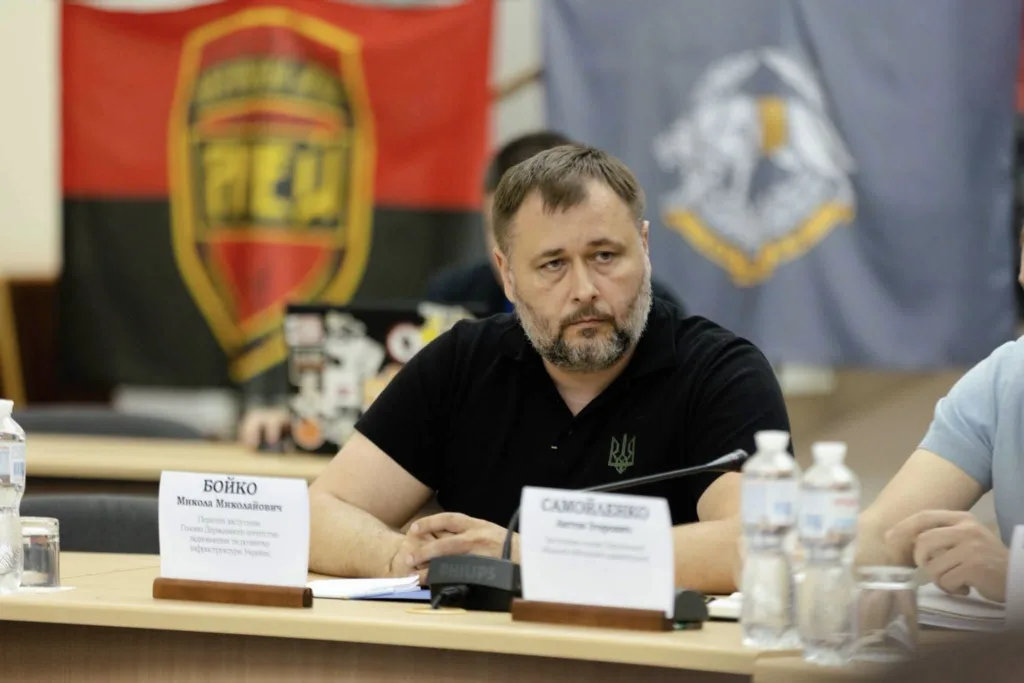
“Today, the Agency for Restoration is implementing physical protection projects at more than 100 critical infrastructure facilities across different regions of Ukraine. Some have already been completed, while most are at the final stage of implementation.
Strengthening the protection of critical infrastructure is an investment in the resilience of the state. It means uninterrupted operation of energy, water supply, logistics, and other systems that millions of Ukrainians rely on every day,” said Mykola Boiko.