
On August 26, the first 5,000 cubic meters of water reached the city through the pipeline network. The water is being supplied into the systems and reservoirs of the water utility. Prior to this, specialists carried out phased test-filling of the system over several weeks, strictly following all technological norms. This water circulation made it possible to gradually check the condition of the entire network and avoid damage.
Prime Minister of Ukraine Yulia Svyrydenko together with Deputy Prime Minister for Restoration of Ukraine and Minister for Communities and Territories Development of Ukraine Oleksii Kuleba visited the facilities of the Mykolaiv water pipeline. During the visit, Head of the Agency for Restoration Serhii Sukhomlyn spoke about the key stages of the project’s implementation.

“We visited the treatment facilities and the second pumping station. The lifting stations are operational and built underground for safety, as are the cable networks. Work is being finalized on the construction of shelters for personnel. Irrigation systems for the fields—where an additional 50 cubic meters of water per day will be directed—are ready. Over 500,000 people are receiving fresh water. This is the first time since the main water pipeline was destroyed in 2022. It’s a team effort. Thanks to the President of Ukraine, the Cabinet of Ministers, the Ministry for Communities and Territories Development and local authorities. Water supply is a critically important aspect of life,” noted the Head of the Agency for Restoration.
To ensure that 500,000 people could get access to quality water supply as quickly as possible, the project was implemented rapidly. In the fall of 2024, the Agency for Restoration conducted a feasibility study. Construction work began in February 2025, and by August, fresh water was being supplied to the city.
Notably, thanks to the feasibility study, UAH 2.4 billion were saved, while also incorporating a number of modern energy-efficient solutions into the project. The current cost of the water pipeline construction stands at UAH 6.3 billion, including additional works, whereas the initial estimated cost was UAH 8.7 billion.
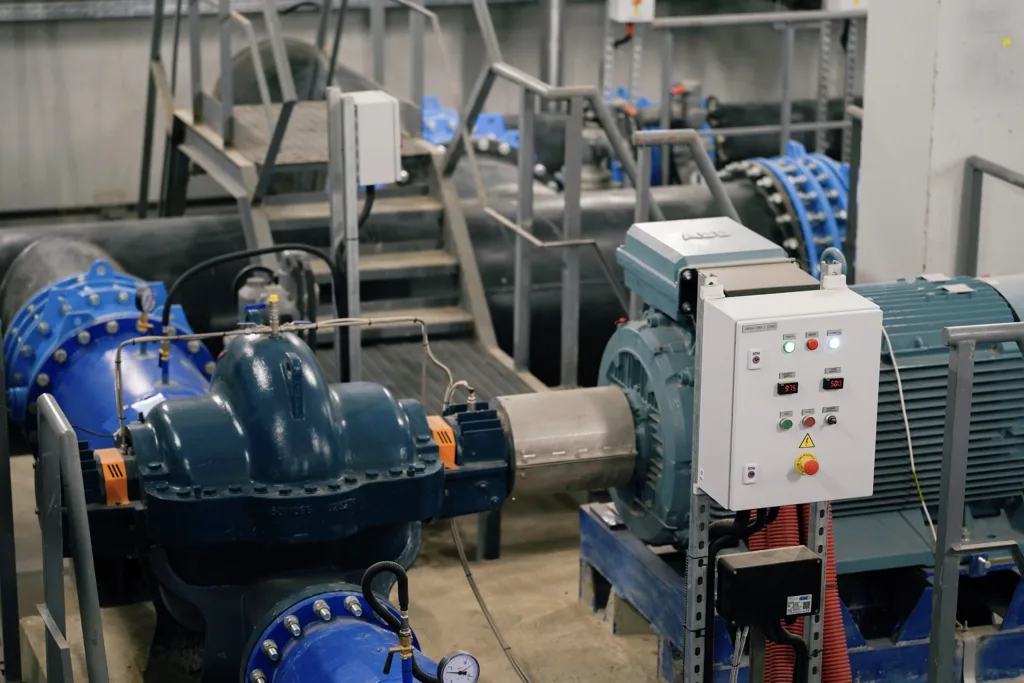
A comprehensive approach was taken during construction, and additional work was carried out. In addition to 120 cubic meters per day capacity for the population, an extra 50 cubic meters per day was allocated for irrigation—this is a separate connection at the second pumping station.
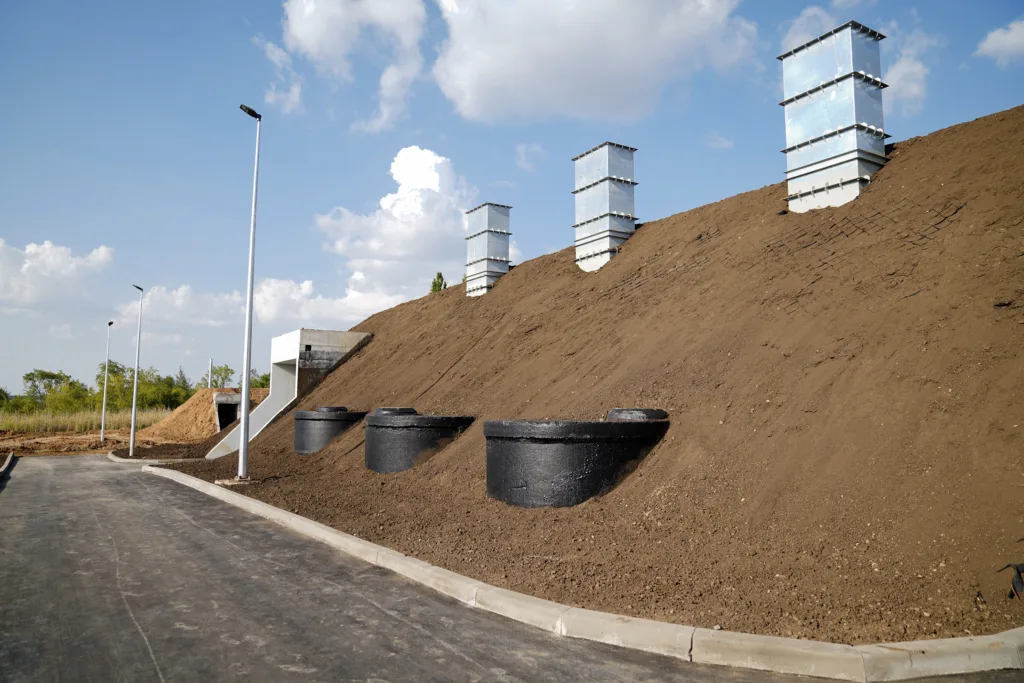
Considering the realities of wartime and constant enemy attacks, safety was one of the key aspects in constructing the new pipeline. All cable networks are underground. Pumping station structures are partially buried and additionally covered with soil for protection and durability. The final construction phase includes the installation of shelters near the pumping stations to protect personnel during air raid alerts.
Currently, over 90% of the entire project has been completed. The entire pipeline—around 136 km in two lines, each 67.9 km long—has been installed. Pumping stations are 88% complete. Landscaping and restoration of access roads will follow.

The Mykolaiv water pipeline is one of the state’s most important and largest infrastructure projects. The budget savings are planned to be allocated for the construction of water pipelines in the Myrivska and Tomakivska communities in Dnipropetrovsk region, the Bolhrad and Suvoriv group pipelines in Odesa region, and pipelines in Lubny (Poltava region) and Vapniarka (Vinnytsia region).
Yesterday, the Government approved the list of priority projects for new construction, reconstruction, capital repairs, and modernization of water supply systems and networks in these regions.