
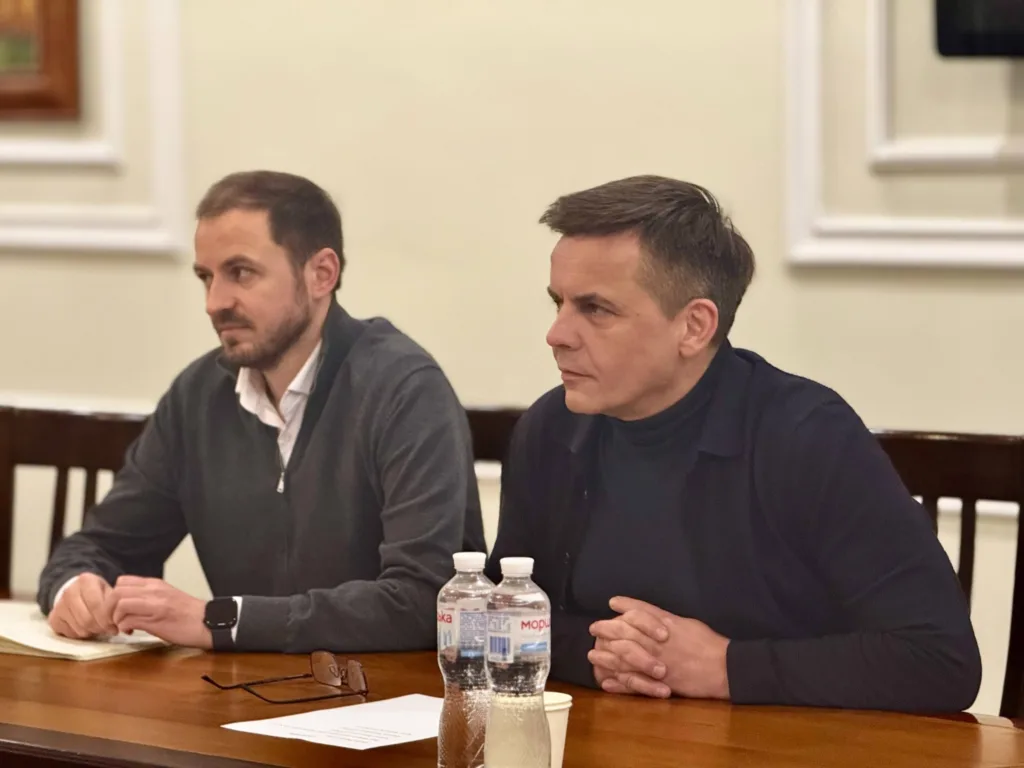
The Head of the Agency for Restoration, Serhii Sukhomlyn, held a meeting with partners from Lithuania and representatives of the Zhytomyr City Council. The meeting was attended by the Ambassador Extraordinary and Plenipotentiary of the Republic of Lithuania to Ukraine, Inga Stanitė-Toločkienė; the Ambassador-at-Large of the Lithuanian Ministry of Foreign Affairs for the coordination of Ukraine’s recovery and reconstruction, Darius Skusevičius; representatives of the CPVA team; Acting Mayor of Zhytomyr Halyna Shymanska and First Deputy Mayor Svitlana Olshanska.
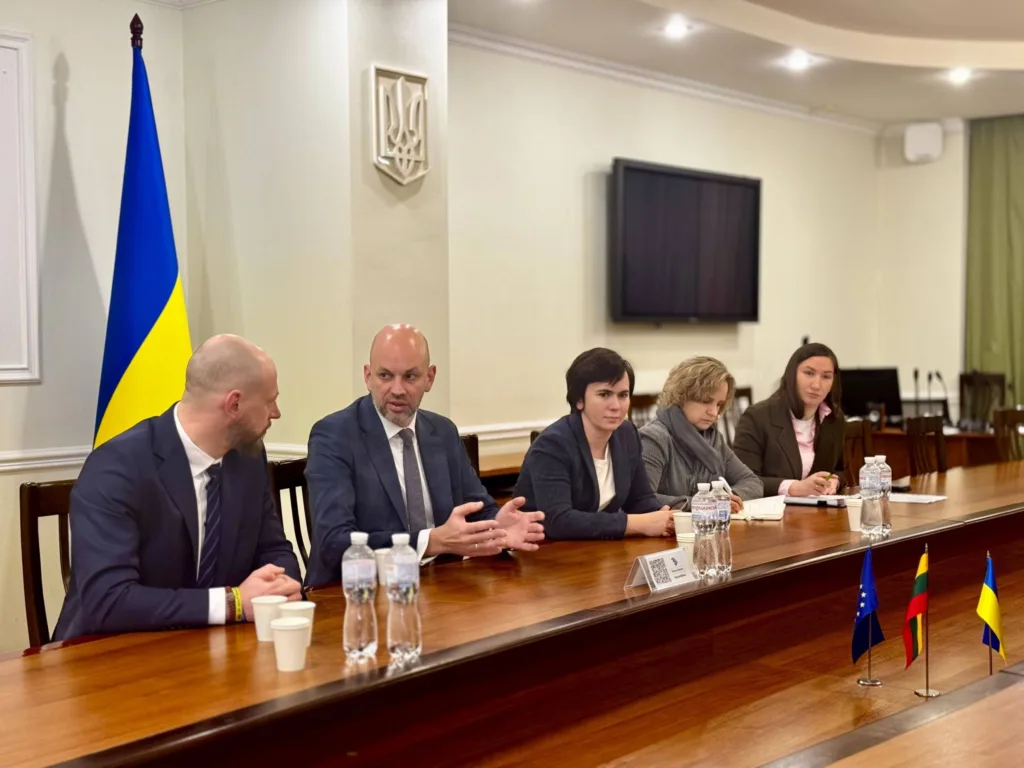
The focus of the discussion was the implementation of the project to build a School of the Future in Zhytomyr on the site of Lyceum No. 25, which was destroyed by russia. This project is the result of long-term, systematic work that has now moved into the practical phase.
“We worked together with the city council team for a long time to find opportunities and solutions. During wartime, it was not easy to attract funding and the attention of international partners. But this work never stopped. Lithuania’s support became the factor that allowed us to move from intentions to real steps. Thank you for your trust, partnership, and willingness to lend a helping hand,” Serhii Sukhomlyn noted.
In the summer of 2025, during the URC, the first memorandum on supporting the recovery of Ukrainian education was signed. Later, in September 2025, another tripartite memorandum was signed between the Agency for Restoration, the Zhytomyr City Council, and the Lithuanian Ministry of Foreign Affairs regarding future cooperation. The project is now entering a new stage of further implementation.
The School of the Future in Zhytomyr will be built according to new principles and standards, with a different philosophy. It will be a safe, accessible, and comfortable space for children and teachers, featuring a modern educational environment.
Design will be fully digital and carried out using a BIM model. This will help ensure transparency in implementation and achieve real savings of 10–15% by minimizing errors. The project is currently at the stage of preparing a feasibility study. The next step will be direct construction.
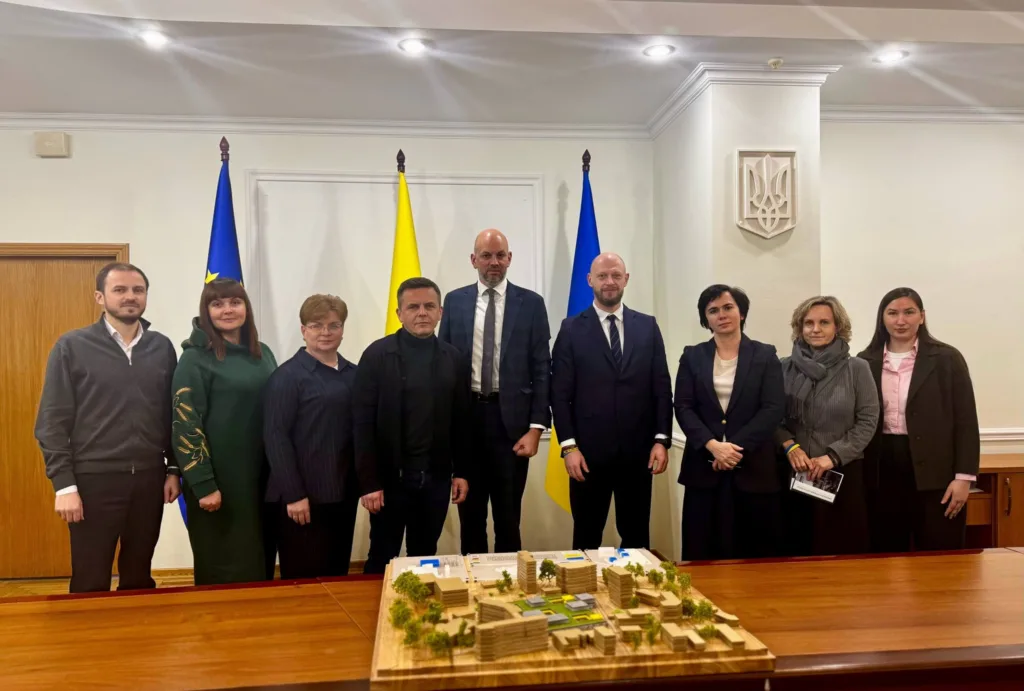
Importantly, the implementation will apply the principle of reuse, which can be scaled to other communities. These are exactly the types of projects the Agency for Restoration focuses on. This approach is about rapid reconstruction, adapting ready-made solutions, and efficient use of funds—especially relevant for post-war recovery.