
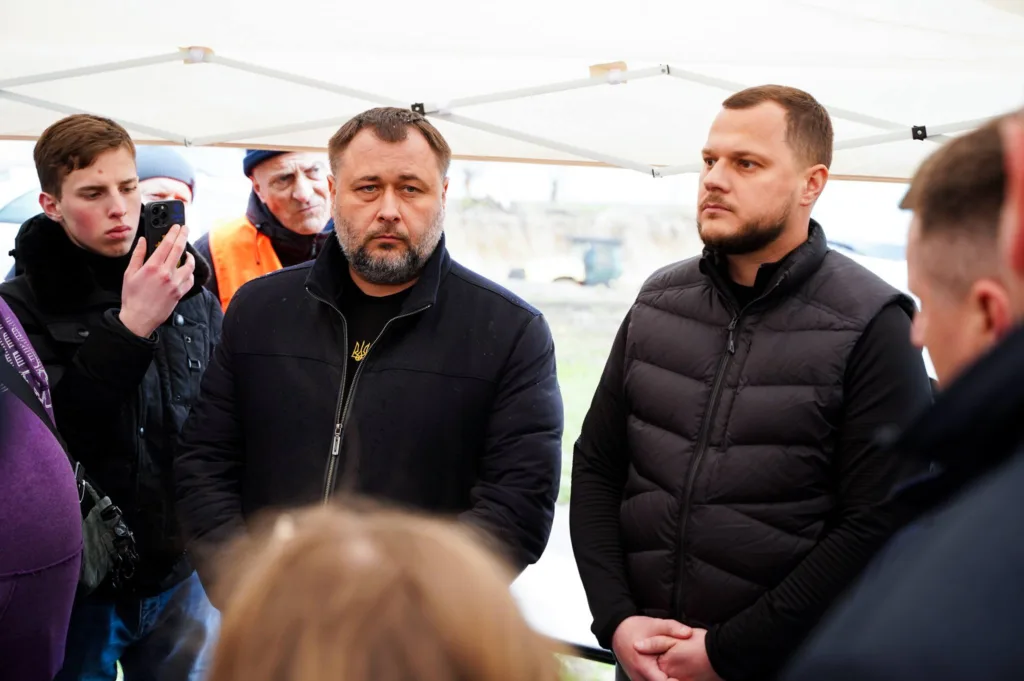
In the Kyiv region, the restoration of housing damaged as a result of the full-scale invasion of the Russian Federation is ongoing. Today, First Deputy Head of the Agency for Restoration Mykola Boiko, together with Head of the Kyiv Regional Military Administration Mykola Kalashnyk and representatives of the Hostomel Military Administration, visited Hostomel, where the first and second phases of the military town construction have begun.
The rights of the client were transferred to the Agency for Restoration in the summer of last year. The project was revised and underwent a repeated expert review, taking into account requirements for energy efficiency, inclusivity and safety. Following the completion of tender procedures, construction works have started.
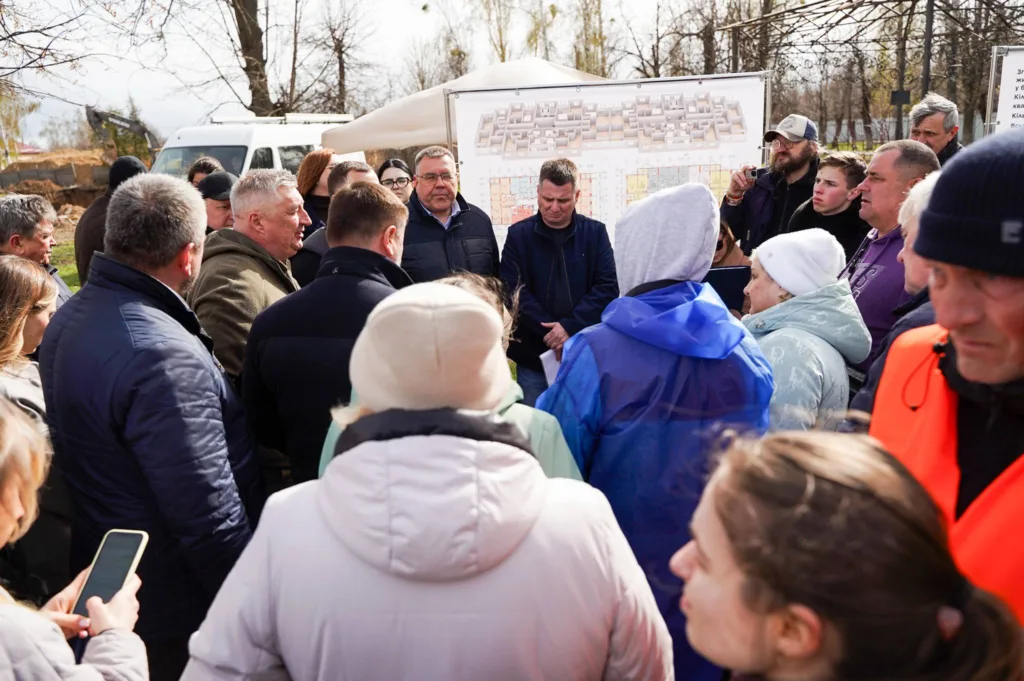
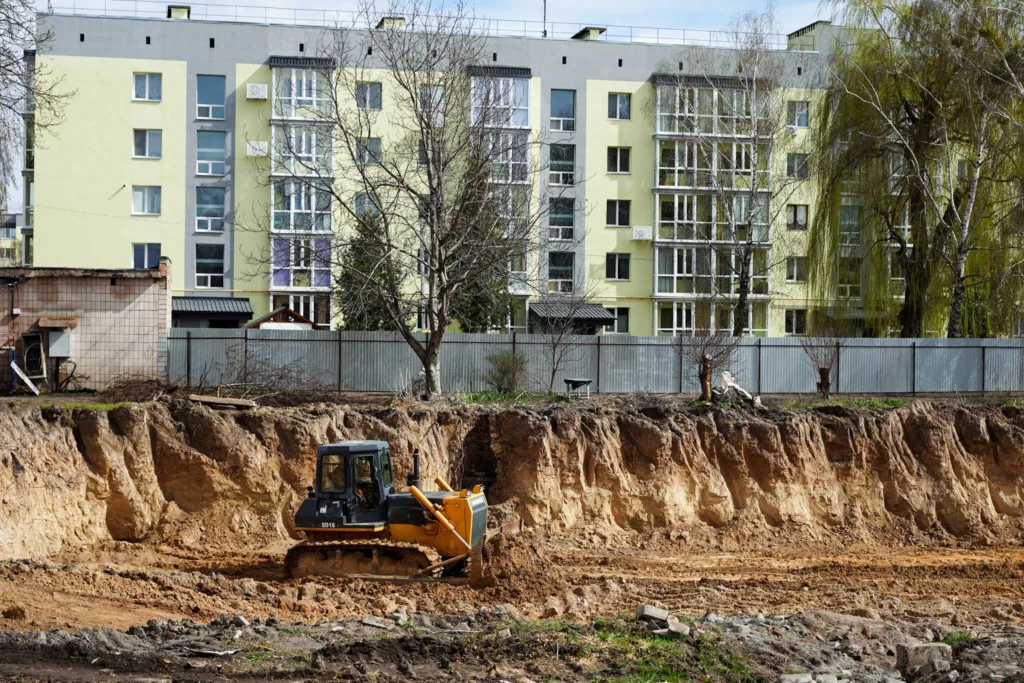
Currently, preparatory works are underway for the construction of two buildings with a total capacity of 144 apartments. Excavation works are ongoing at the site, construction equipment is being delivered, and temporary site facilities are being installed. The first phase of construction also includes the construction of a fallout shelter and the complete replacement of utility networks. The shelter, with an area of 2,100 square meters, is designed to accommodate 1,212 people at a time. In peacetime, the facility can be used as a sports complex.
“The primary concern for people waiting for restored housing is the order of receiving apartments. Out of 272 families who lived in the destroyed buildings, 106 have already received housing certificates with monetary compensation. Apartments built within the first two phases will first be provided to families who lived here and lost their homes. We aim to build quickly without compromising on quality. All processes are being carried out in parallel,” said Mykola Boiko.
In total, on the site of five destroyed buildings that previously contained 272 apartments, it is planned to construct modern seven-story buildings with 360 apartments. The project also includes the construction of a radiation shelter and the complete replacement of engineering networks. Residents will be involved in discussions on decisions regarding housing design, public spaces, and surrounding areas.