
A kick-off meeting has held to start the preparation of a strategic document that will define the key directions for the Agency’s development as an institution, as well as approaches to its positioning within the public investment management system.
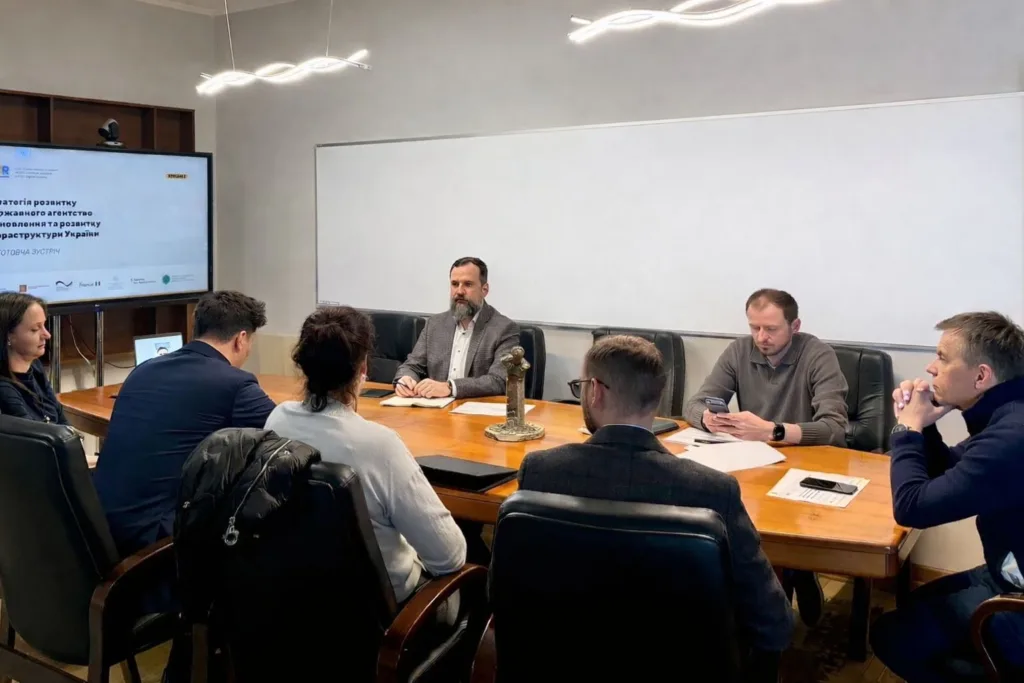
The development and implementation of the Strategy will help position the Agency as a reliable partner for delivering the most complex infrastructure projects and as a centre of expertise for the Government.
A key component will be strengthening the Agency’s role across the public investment management cycle — from project preparation and appraisal to implementation monitoring and quality control. This will help minimise the risks of functioning solely as an “implementing body” and ensure a more strategic approach to reconstruction. In addition, the development and adoption of the Strategy will contribute to the implementation of the recommendations outlined in the 2025 Enlargement Report.
“The Agency should focus on developing comprehensive, high-quality solutions and implementing complex national projects. Building a bridge over the Danube or constructing a new international highway that passes through several regions of Ukraine are tasks at the level of the Agency. However, achieving this will require going through a rather challenging path,” said Serhii Sukhomlyn, Head of the Agency.
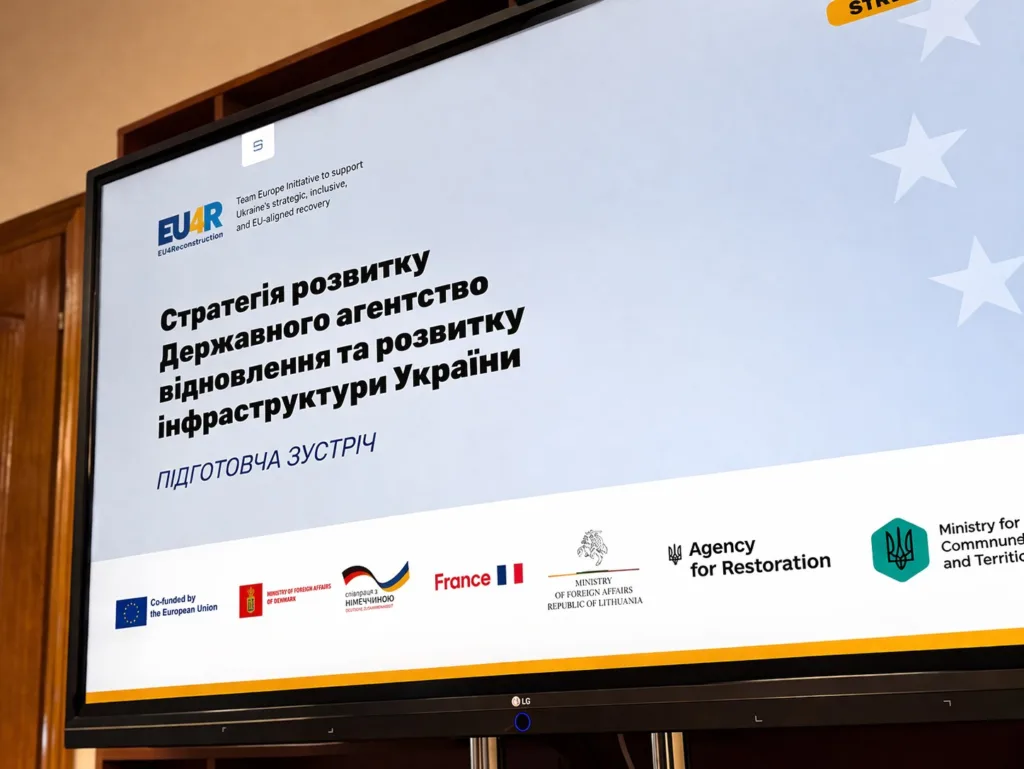
The Strategy will be developed under the joint leadership of the Ministry for Communities and Territories Development of Ukraine and the Agency for Restoration with the support of EU4Reconstruction Stream 2. The process includes regular consultations with the Agency’s International Advisory Board, executive authorities, and international financial organisations, ensuring alignment with international best practices and EU requirements.
“Developing the Strategy for the State Agency is one of the key instruments for the systemic transformation of approaches to reconstruction. It should clearly define priorities, enhance transparency in decision-making, and ensure the efficient use of limited resources. For the Government, this means better coordination in the implementation of infrastructure projects, reduced duplication of functions, and strengthened institutional capacity. For international partners, it is a signal of predictability and accountability,” emphasised Taras Sluchyk, Acting Head of EU4Reconstruction, Stream 2.