
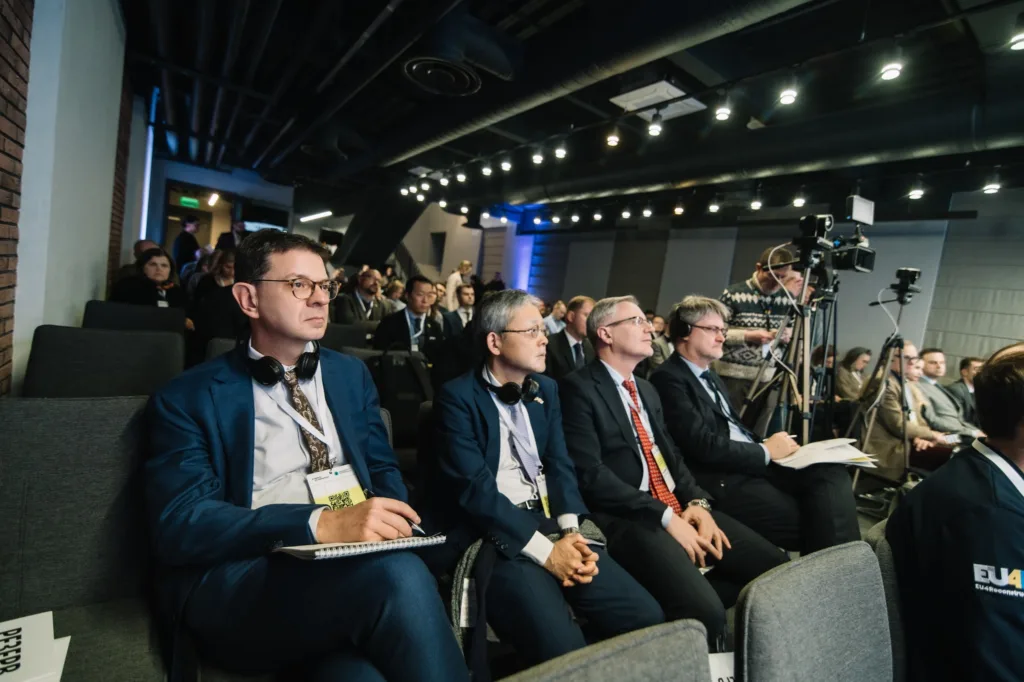
The Ministry for Development of Communities and Territories of Ukraine and the State Agency for Restoration and Infrastructure Development of Ukraine has held a joint meeting with international partners and donors.
The event was attended by Oleksii Kuleba, Deputy Prime Minister for Restoration of Ukraine and Minister for Development of Communities and Territories of Ukraine; Stefan Schleuning, Head of Cooperation at the EU Delegation to Ukraine; Serhii Sukhomlyn, Head of the State Agency for Restoration and Infrastructure Development of Ukraine; ambassadors of foreign states, representatives of diplomatic missions, and international financial institutions.
The event was held with the support of EU4Reconstruction Stream 2, implemented jointly by the Ministry of Foreign Affairs of Denmark and the Central Project Management Agency of Lithuania (CPVA). In his address, Oleksii Kuleba underscored the importance of sustained international support for Ukraine and outlined the country’s recovery priorities.
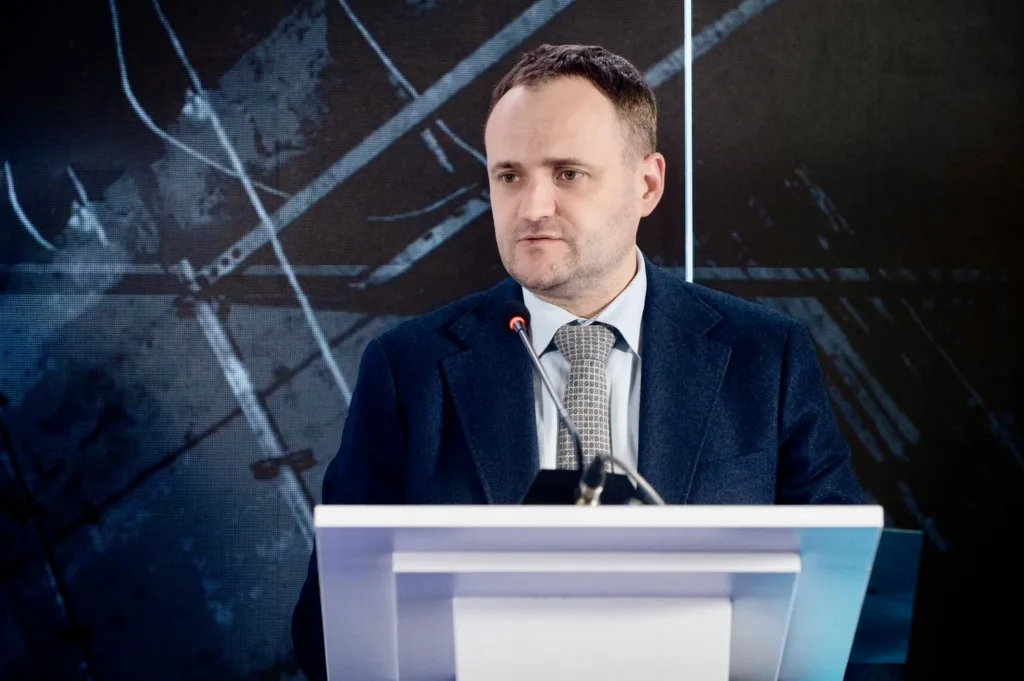
“The scale of destruction caused by the war is unprecedented. That is why the support of international partners and their sustained engagement are critical. We deeply value this solidarity and are grateful to everyone who is already helping Ukraine rebuild today. Even amid ongoing hostilities, we cannot afford to postpone recovery, as it directly affects the quality of life of millions of people. Together with our partners, we are shaping a clear and focused recovery agenda. Our priorities remain unchanged: housing for people, restoration of frontline areas, continuity of logistics, and energy resilience. Today, Ukraine stands as Europe’s security shield. We are holding back not only missiles, but also the enemy’s efforts to normalize attacks on civilian infrastructure, to turn winter into a weapon, and to strip people of their fundamental rights,” said Oleksii Kuleba.
In his welcoming remarks, Stefan Schleuning, Head of Cooperation at the EU Delegation to Ukraine, thanked the leadership of the Ministry and the Agency for Restoration for their important work, particularly in the area of protecting energy facilities. He highlighted the Agency’s significant progress over the past year, including organizational development, the establishment of a Centralized Procurement Organization, improvements in digital services, and the introduction of integrity mechanisms with the support of the EU Anti-Corruption Initiative.
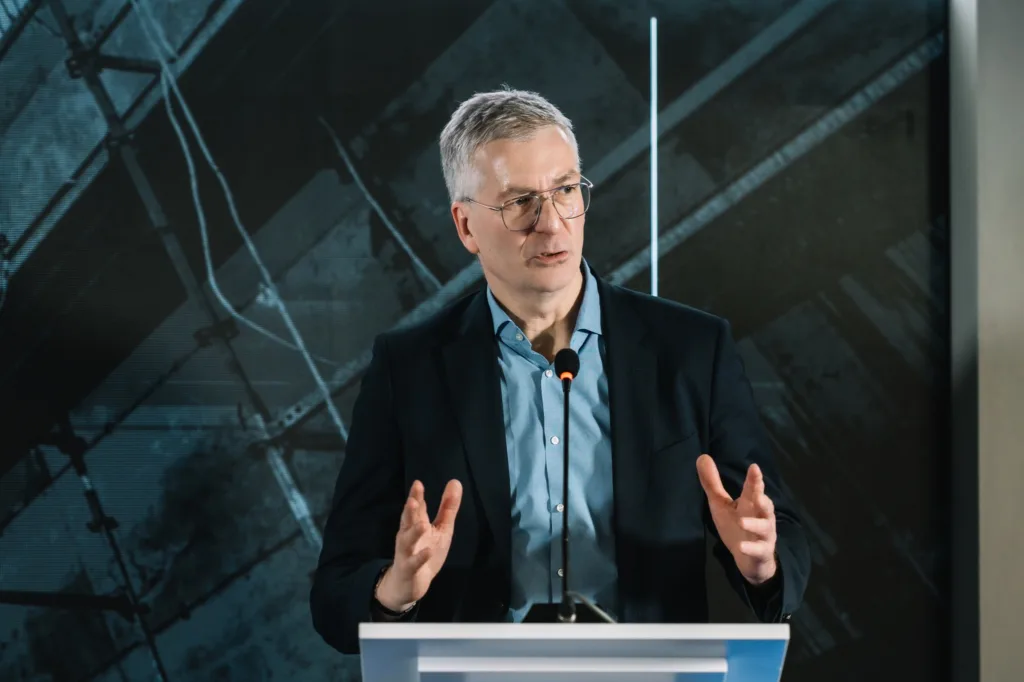
Stefan Schleuning recalled that the EU had recently launched the EU4Reconstruction project together with Denmark, Germany, France, and Lithuania to support the Ministry and the Agency for Restoration among other activities. The EU, in turn, will support the Agency to complete the transformation process and encourage future pillar assessment, which will allow for the direct implementation of EU funds. He informed participants that, together with international financial institutions (EIB, EBRD, and the World Bank), partnerships are being developed within the investment component of the UkraineFacility, including the JASPERS program, the Solidarity Lanes project, and the modernization of border crossing points.
“Ukraine’s recovery is not only about rebuilding what has been destroyed. It is about building a stronger country for the future. This requires trust that projects are selected and implemented fairly, that costs are credible, and that competition works. That is why a transparent construction market is a central element of the recovery effort and Ukraine’s European path,” Stefan Schleuning emphasized.
Serhii Sukhomlyn, Head of the Agency for Restoration, thanked the Ministry and international partners for their support and emphasized that every Agency project is the result of joint efforts. He also highlighted a resolution adopted by the Ministry that changes the construction paradigm in Ukraine.
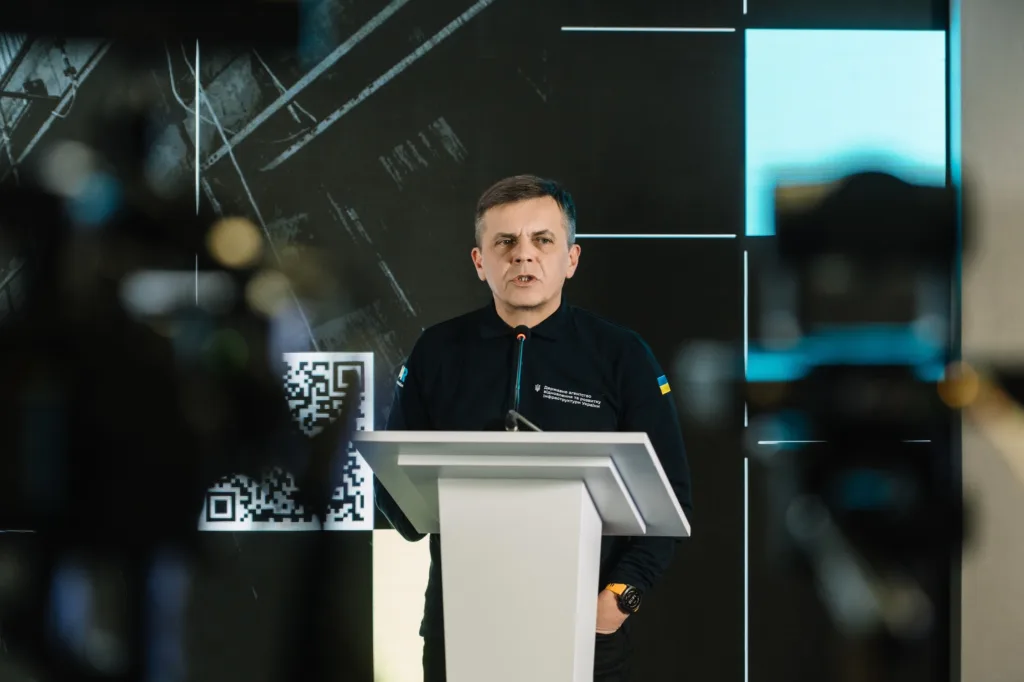
“This is truly a revolutionary decision. For decades, we operated within an outdated, essentially Soviet-era construction paradigm. The new rules now make it possible to build transparently: to form realistic budgets, ensure fair wages, provide life insurance for people working in frontline regions, and allow fair profits for contractors,” said Serhii Sukhomlyn.
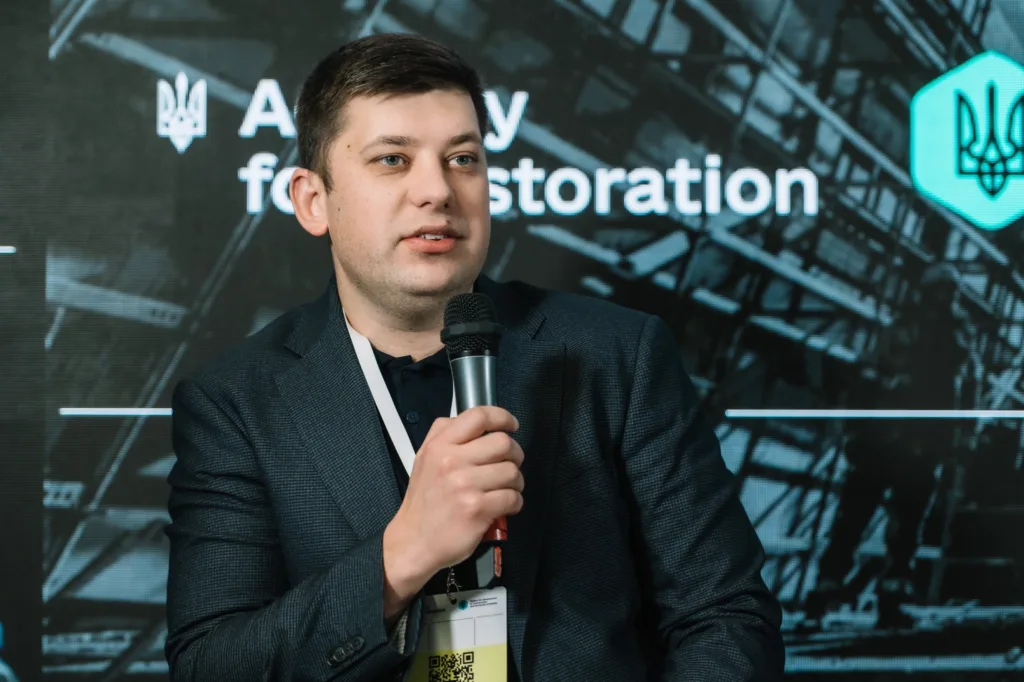
During his presentation, Yurii Sverba, Deputy Head of the Agency responsible for Procurement, announced the launch of a construction transparency dashboard for protective structures, which publicly discloses the costs of key materials. He also noted the introduction of an EU-supported procurement risk management system—the first of its kind implemented in Ukraine.
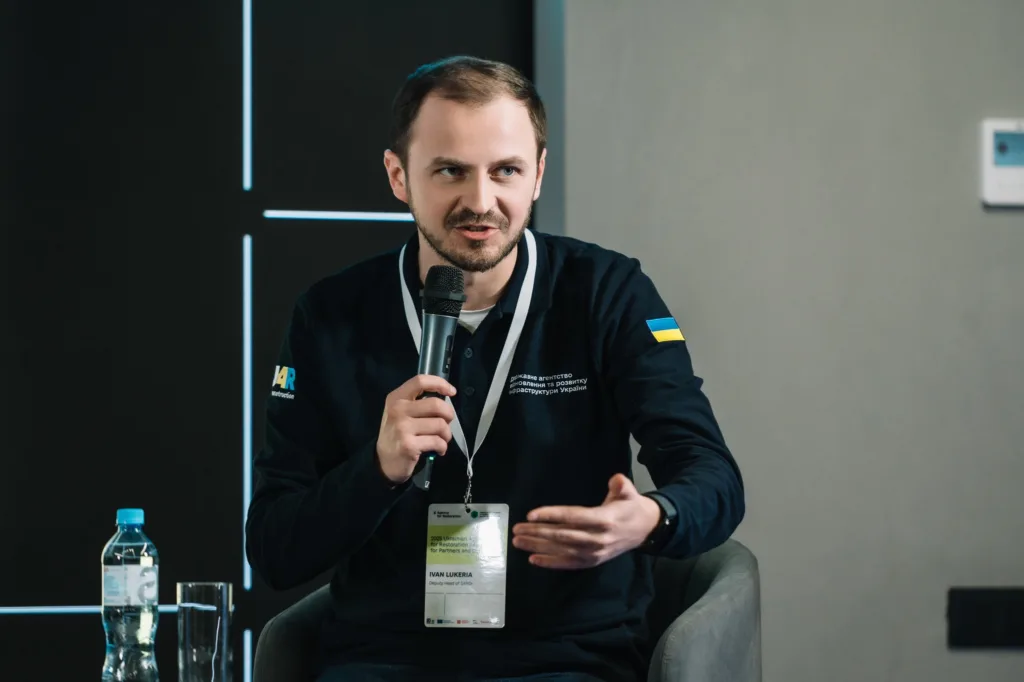
In his remarks, Ivan Lukeria, Deputy Head of the Agency for Restoration, said that the Agency is implementing an international investment project portfolio totaling EUR 1.8 billion, with a completion horizon of the next one to two years, aimed at Ukraine’s infrastructure integration with Europe. The strategic goal is to connect all major Ukrainian cities with Europe and the country’s south, transforming Ukraine into a powerful transit state. He noted that the Agency has launched a systemic transformation to work effectively with the EBRD, EIB, and the World Bank, and that advisory groups for strategic transformation and expertise development have been established with the support of the EU4Reconstruction initiative.
For his part, Roman Komendant, Deputy Head of the Agency for Restoration for Digitalization, reported that 62 Weigh-in-Motion (WIM) systems are currently operating in Ukraine, with 50 additional locations already approved. He noted that Ukraine is the only country where WIM systems operate fully automatically with fines for violations. Nearly 6,000 violation rulings have already been issued. As a result of WIM operations in 2025, almost UAH 118 million was collected in paid fines.
Roman Komendant also reported that the Agency is implementing the first full-scale BIM model, using the Yahodyn road border crossing point as an example.
“For Ukraine, the recovery of communities is critically important. Delivering recovery that is truly comprehensive, sustainable, and aligned with EU standards is an initiative of President Volodymyr Zelenskyy, and we are already working to put this vision into practice. One example is the comprehensive recovery of Borodianka in the Kyiv region, where the reconstruction of housing and social infrastructure in line with EU standards is accompanied by the implementation of security-focused, energy-efficient, and accessible solutions. After the war, we will not have time to restore what has been destroyed quickly and effectively, so we must learn to do this properly already now,” Serhii Sukhomlyn emphasized.
The detailed Agency for Restoration Report for 2025 is available via the link and is presented in both Ukrainian and English.