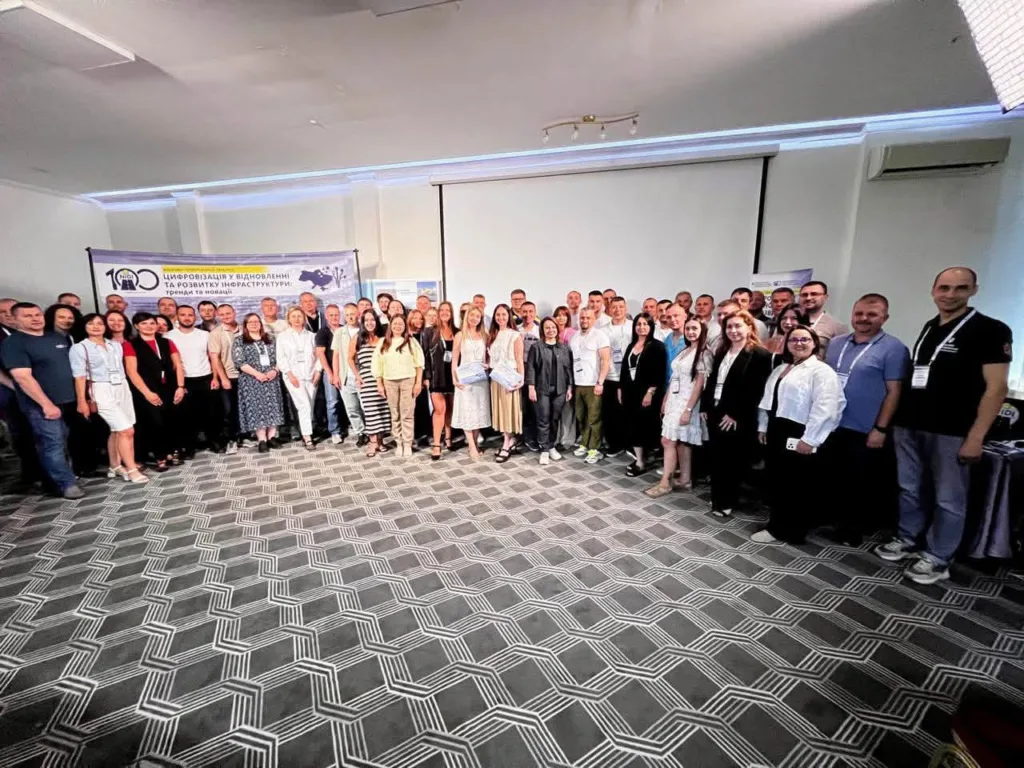
On 9–10 July in Odesa, the State Agency for Restoration and Infrastructure Development of Ukraine, jointly with the State Enterprise “National Institute for Infrastructure Development”, held the Second All-Ukrainian Scientific and Practical Seminar, “Digitalisation in Infrastructure Recovery and Development: Trends and Innovations.”
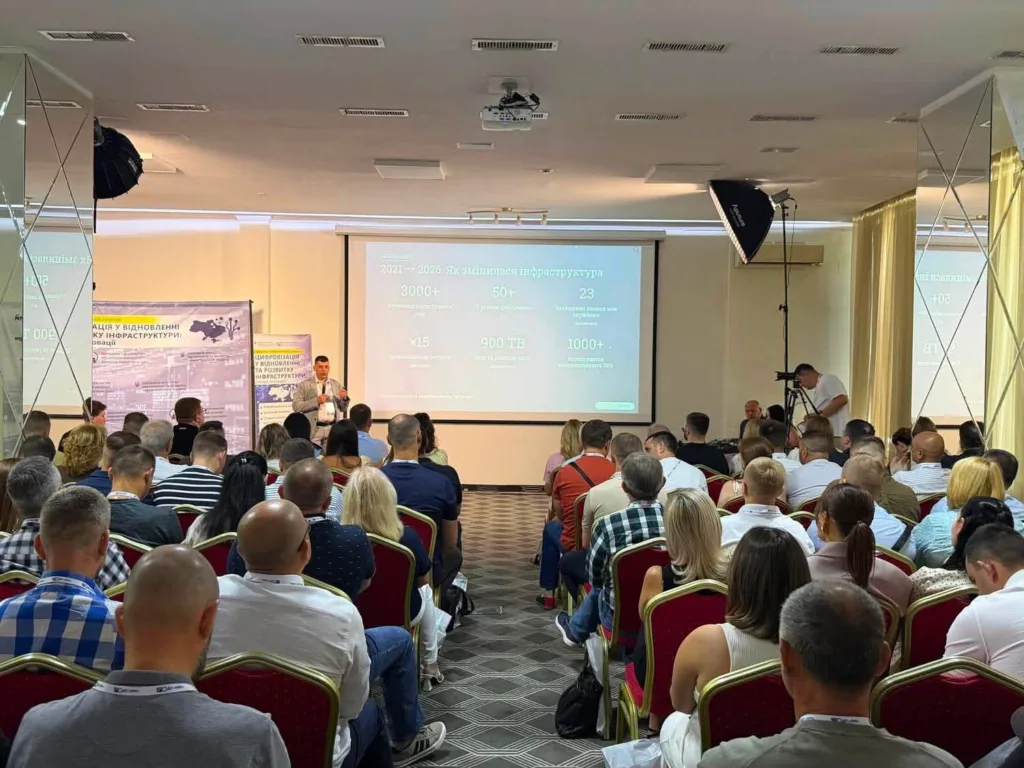
The event brought together nearly 150 representatives of the Agency, regional Services for Restoration and Infrastructure Development, state-owned enterprises, public authorities, experts and business representatives. Over two days, participants discussed practical solutions that are already transforming approaches to infrastructure project management and shaping Ukraine’s digital recovery ecosystem.
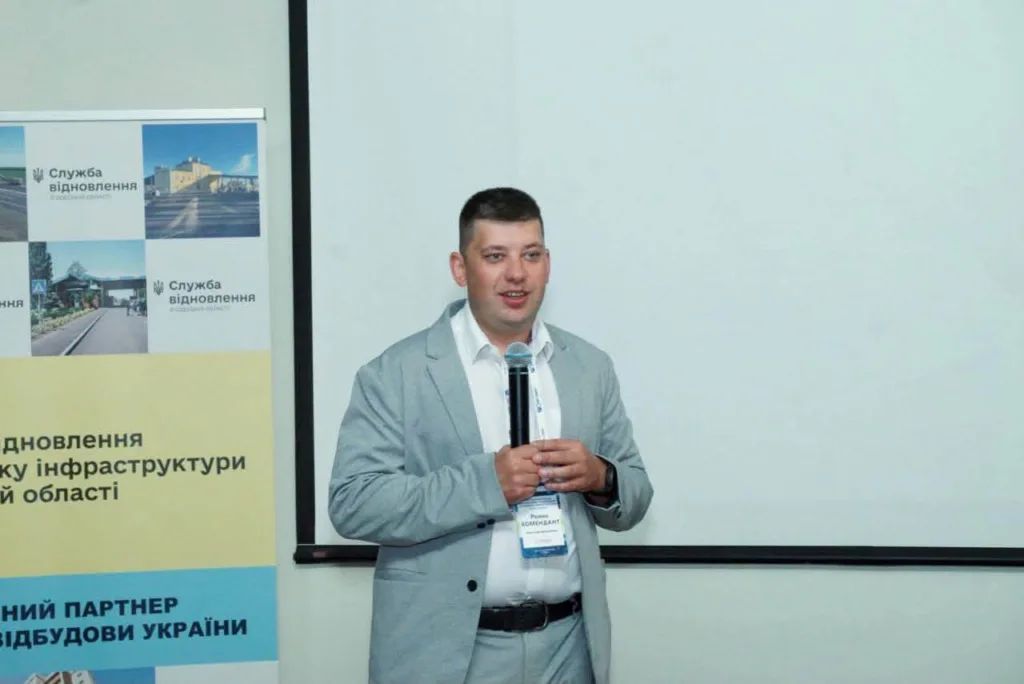
The seminar was initiated by Roman Komendant, Deputy Head of the Restoration Agency for Digital Development, Digital Transformation and Digitalisation, who opened the event.
“Digitalisation is not a separate area of activity but a new standard for managing recovery. As one team, we are building a system in which every management decision is based on data, modern digital tools and transparent processes. Therefore, our task is not only to introduce new technologies but also to foster a shared digital culture across the entire Restoration Agency ecosystem,” Roman Komendant emphasised.
Ihor Reva, Deputy Minister for Communities and Territories Development of Ukraine for Digital Development, Digital Transformation and Digitalisation, also delivered welcoming remarks to the seminar participants.
“Ukraine’s reconstruction must be based on modern digital approaches. This enables transparency of processes, improves the efficiency of resource use and creates a fundamentally new infrastructure management system. Importantly, digital solutions are already becoming an integral part of practical work at all levels,” Ihor Reva noted.
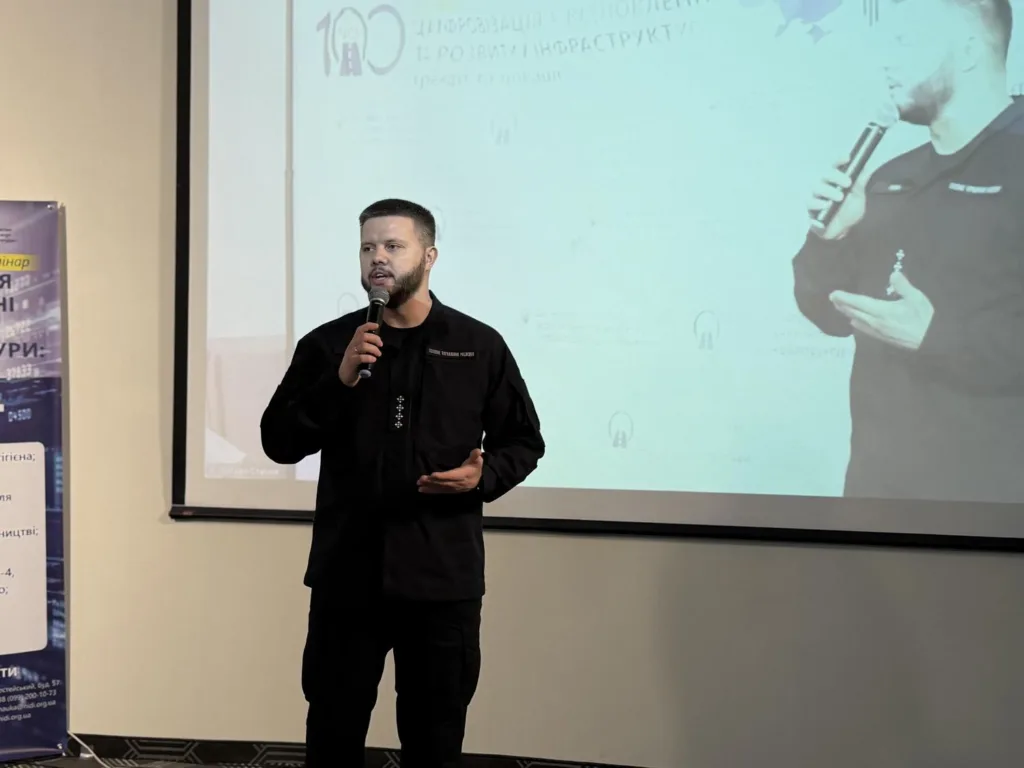
Participants were also welcomed by Andrii Donchenko, Head of the Service for Restoration and Infrastructure Development in Odesa Region, who emphasised the importance of such professional platforms for exchanging experience between regions and integrating modern digital solutions directly into the implementation of recovery projects.
The seminar programme covered the key areas of digital transformation in the infrastructure sector.
During the first day, participants explored the results of the digital transformation of the Restoration Agency, regional Restoration Services and the State Enterprise “National Institute for Infrastructure Development”. The programme also covered modern information and communication systems and dashboards for management decision-making, cybersecurity and cyber hygiene, as well as practical digital tools already being used across the sector.
Particular attention was paid to the development of intelligent transport systems, technologies for automatic information recognition from photo and video materials, the development of Weigh-in-Motion (WIM) systems, multifunctional SHAFL structures, the potential of artificial intelligence for process automation, and the key directions of the Restoration Agency’s digital transformation through 2030.
Iryna Hudyma, Head of the Digital and Innovative Development Department of the Restoration Agency, presented the results of digital initiatives and outlined the next steps in developing a digital ecosystem for infrastructure project management. In particular, the presentation addressed the development of digital services, information and communication systems, Weigh-in-Motion (WIM) technologies, and the E-road platform and its components for building information and analytical, reporting and monitoring systems. These initiatives are also being implemented with the support of the Budgetary Institution “Information and Analytical Centre for the Road Sector”.
The implementation of these solutions contributes to strengthening data protection, improving information collection, monitoring and analysis processes, ensuring timely access to reliable data for effective management decision-making, and increasing the transparency and effectiveness of infrastructure project management.
The second day focused on digital technologies in infrastructure design and asset management. Participants explored the practical expert use of the LIRA 10.16 software package, the results of international technical assistance provided by JICA in the field of road monitoring, and the capabilities of an automated expert bridge management system to improve the efficiency of transport infrastructure operation.
The Digital Construction Office (DCO) team of the Foundations for Infrastructure and Recovery (FIRE) Programme, implemented with the support of the British Embassy, also contributed to the seminar. In particular, Olena Bondar, DCO Lead Expert and member of the EU BIM Task Group, delivered a presentation entitled “From Pilot Project to Scaling Up: Shaping Digital Approaches within the Restoration Agency.”
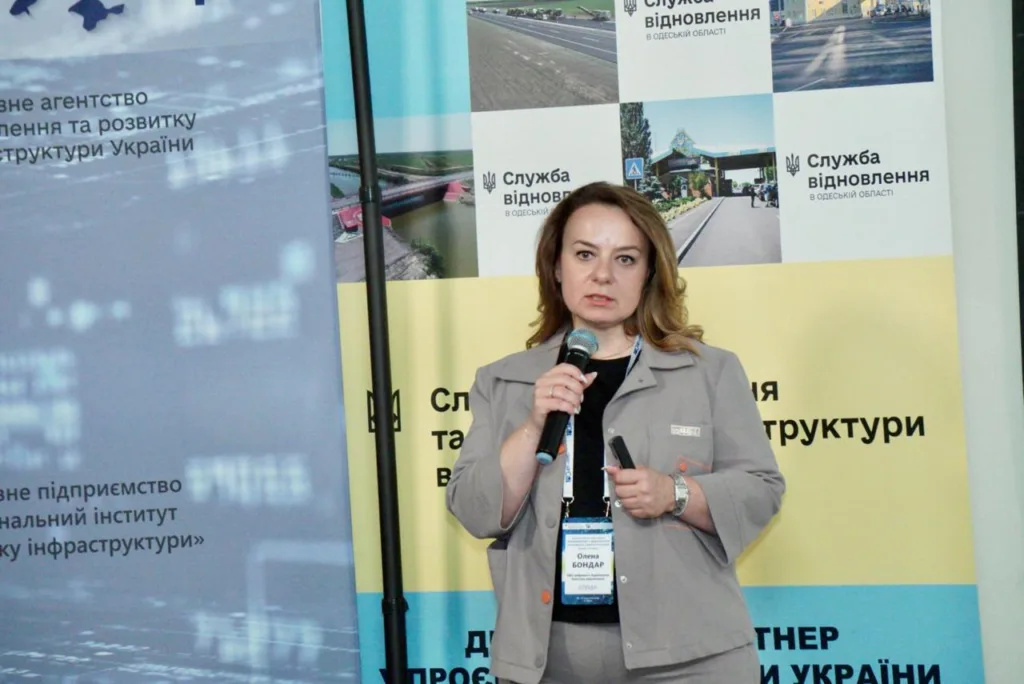
Participants were shown how Building Information Modelling (BIM) is integrated across all stages of an asset’s lifecycle—from planning and design to construction and operation – supporting effective data management, transparent processes and high-quality management decision-making.
Particular attention was paid to the practical results achieved under the FIRE Programme, including the development of the BIM Implementation Plan for the Restoration Agency, implementation of the first state BIM pilot at the Yahodyn international border crossing point, development of the regulatory framework, introduction of a Common Data Environment (CDE) as a unified data environment, development of professional competencies, and international cooperation on the implementation of digital construction in line with ISO 19650 standards.
Seminar participants had the opportunity not only to learn about leading digitalisation practices but also to discuss current challenges, exchange experience between regions, ask questions of experts and establish new professional contacts. Upon completion of the training, participants received certificates.
Digital transformation remains one of the Restoration Agency’s key priorities. The introduction of modern digital tools, the development of information systems, BIM technologies, data analytics and digital services are creating the foundation for the transparent, efficient and rapid recovery of Ukraine’s infrastructure.